BMW i4 vs Tesla Model 3: Which Pre-Owned EV Makes More Sense in BC?
BMW i4 vs Tesla Model 3: Which Pre-Owned EV Makes More Sense in BC?
Posted on July 23, 2026
For buyers in British Columbia comparing a used BMW i4 vs used Tesla Model 3, the decision depends on comfort, charging ecosystem, winter usability, and long-term ownership experience. Both models are prominent options in British Columbia’s used-EV market. Vancouver shoppers considering a pre-owned BMW i4 can also explore eligible BMW inventory and ownership support through Brian Jessel BMW Pre-Owned.
The BMW i4 focuses on luxury, ride comfort, and dealership-supported service structure. The Tesla Model 3 focuses on software integration, Supercharger access, and efficiency-driven design.
In BC conditions such as winter temperatures, highway commuting, and mixed charging infrastructure, the better choice depends on whether the driver prefers premium comfort or technology-first convenience supported by a fast-charging ecosystem.
BMW i4 vs Tesla Model 3: Quick Comparison for Used EV Buyers
This section provides a structured overview of how both vehicles compare in the Canadian used EV market. Instead of focusing only on specs, it reflects ownership reality in British Columbia, where charging access, winter efficiency, and service structure matter as much as performance.
| Category | Used BMW i4 | Used Tesla Model 3 |
| Driving Focus | Luxury Comfort + Stability | Software-Driven Efficiency |
| Range | Range Varies Depending on Trim, Model Year, Wheel Size, and Equipment Level, as Stated in BMW Canada Specifications. | Range Varies Depending on Trim, Model Year, Wheel Size, and Configuration, as Stated in Tesla Canada Specifications. |
| Charging | CCS Public Networks, Home Charging and Compatible Tesla Superchargers for Eligible Updated Vehicles Using an Approved NACS Adapter | Direct Tesla Supercharger Access, Home Charging and Compatible Third-Party Public Networks |
| Interior | Premium Materials + Controls | Minimalist Screen Design |
| Service | BMW Dealer Network | Tesla Service System |
| Battery & Thermal Management | BMW Battery and Charging Systems Designed for Real-World Electric Driving; Range Can Vary by Temperature, Driving Style, and Conditions | Tesla Thermal and Efficiency Features Vary by Model Year and Configuration; Heat Pump Availability Should Be Confirmed on the Specific Vehicle |
Note: All range, charging, and efficiency information is configuration-dependent. Real-world driving conditions in British Columbia, including temperature, terrain, driving style, wheel size, and charging habits, can significantly affect actual performance.
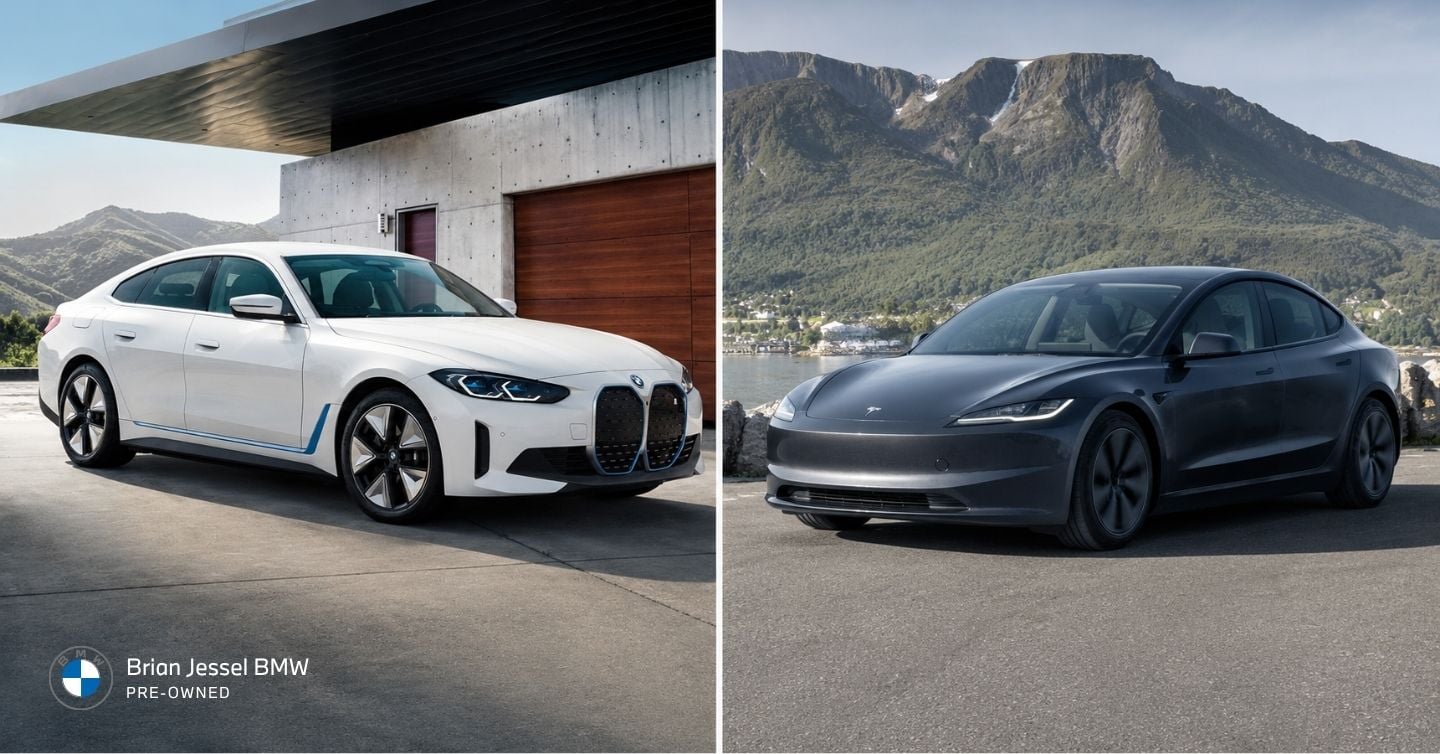
Which Used BMW i4 and Tesla Model 3 Model Years Should You Compare?
Model year matters because equipment, software, charging hardware, cabin design and warranty remaining can differ significantly between used EVs. Production date and trim should still be confirmed on the exact vehicle, particularly with Tesla, where changes may occur during a model year.
Used BMW i4 Model Years Worth Considering
2022 BMW i4: The first Canadian model year and the earliest entry point into the used i4 market. Buyers should compare trim, wheel size, charging history, software status, remaining battery warranty and overall condition.
2023 BMW i4: Broadly similar in core design and driving character to the 2022 model, but individual vehicles may differ in packages, software and equipment. It can offer a useful balance between used pricing and remaining warranty.
2024 BMW i4: Typically newer, with potentially more remaining factory warranty and later software or equipment revisions. Buyers may pay more than for a comparable 2022 or 2023 example, so condition and specification should justify the difference.
Across all three years, the specific trim matters substantially. Rear-wheel-drive and all-wheel-drive i4 variants differ in range, performance and ownership fit.
Learn More: How Many Kilometers Is Too Much for a Used BMW?
Used Tesla Model 3 Model Years Worth Considering
2021 Tesla Model 3: Often represents a lower entry price, but buyers should confirm battery and drive-unit warranty status, heat-pump equipment, charging-port condition, software features and accident history.
2022 Tesla Model 3: May appeal to buyers seeking a more recent pre-refresh Model 3. Equipment can vary by production timing, so heat-pump status, processor, battery configuration and active paid features should be checked on the vehicle.
2023 Tesla Model 3: Another pre-refresh option that may offer more remaining warranty than earlier examples. Buyers should compare price carefully against both 2022 models and refreshed 2024 inventory.
2024 Tesla Model 3: The refreshed Model 3 introduced meaningful cabin, ride, styling and technology changes. It may suit shoppers who prioritize the updated interior and quieter driving experience, but it may command a higher used price.
Tesla changes can occur during production rather than only at fixed model-year boundaries. Buyers should verify the build date, configuration, software status and installed features rather than relying solely on the registration year.
BMW i4 vs Tesla Model 3 Performance Comparison for BC Drivers
Performance in British Columbia is not defined only by acceleration. Road stability, winter handling, and highway comfort are equally important.
Used BMW i4 Driving Experience
The BMW i4 delivers a traditional luxury driving feel, where steering weight and chassis balance are designed for stability rather than extreme responsiveness. On longer BC highway routes, the BMW i4 may feel controlled and quiet, depending on trim, tires, road conditions, and vehicle condition.
Ride comfort is one of its strongest ownership advantages. Suspension tuning, cabin insulation, and seating comfort can make the BMW i4 appealing for drivers who want a premium EV experience rather than a purely technology-first one. Actual ride quality can still vary by wheel size, tire type, trim, and vehicle condition.
Used Tesla Model 3 Driving Experience
The Tesla Model 3 prioritizes responsiveness and simplicity. Acceleration response is immediate, and regenerative braking supports an efficient driving style in city traffic. The driving experience is tightly integrated with software systems, where many vehicle functions are controlled digitally.
This creates a different ownership experience compared to traditional vehicles, where physical controls dominate. In urban BC driving, especially Vancouver traffic, this responsiveness can feel more efficient and direct.
Which Pre-Owned EV Feels Better on BC Roads?
In city driving, the Tesla Model 3 may feel more direct and software-driven. On highways and longer BC routes, the BMW i4 may feel more traditional, comfortable, and stable. In winter conditions, the better experience depends heavily on winter tires, drivetrain, road surface, battery temperature, and driver habits rather than brand alone.
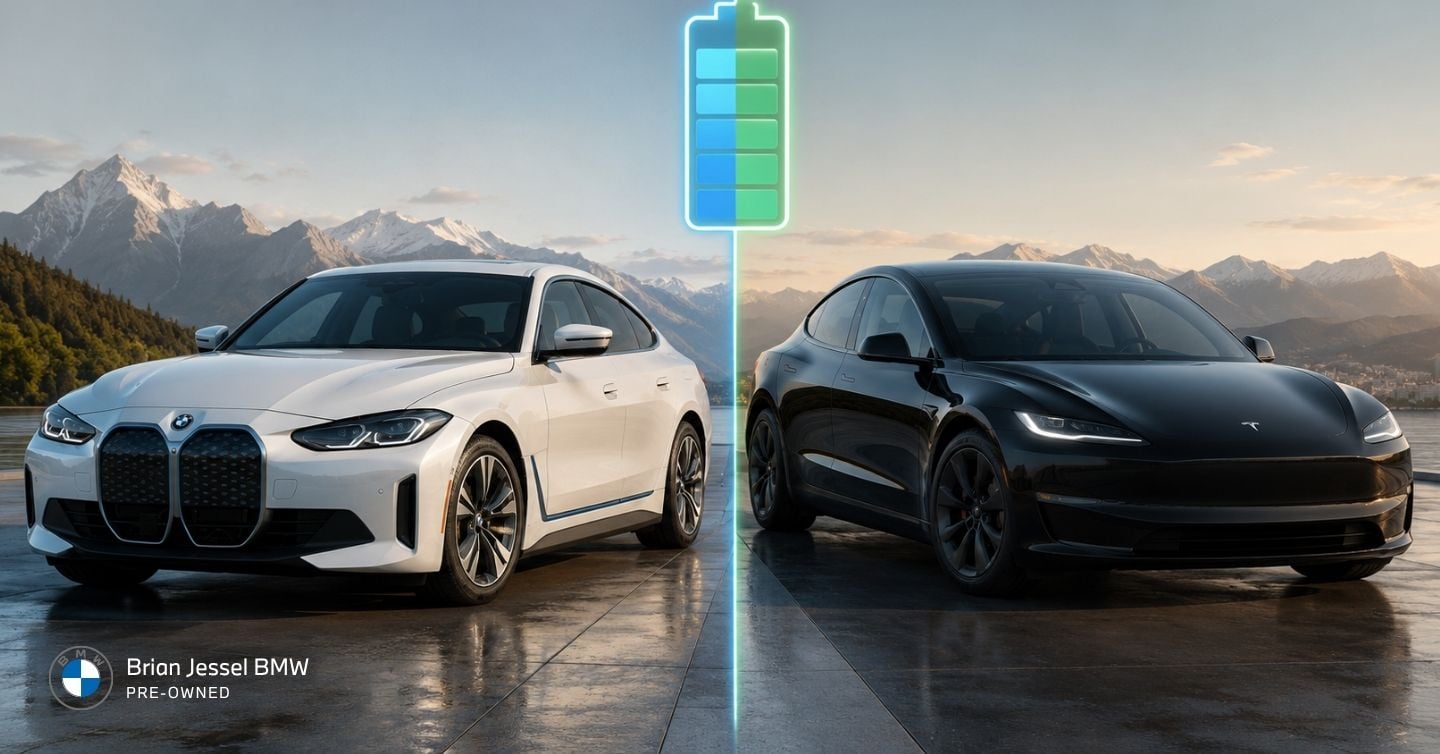
BMW i4 vs Tesla Model 3 Battery Range Comparison
Neither model has one universal range figure. Canadian ratings vary by model year, trim, drivetrain, wheels and configuration. Used buyers should therefore compare the exact BMW i4 and Tesla Model 3 variants rather than applying a single number to either nameplate.
In general, efficiency-focused Tesla Model 3 variants may appeal to buyers prioritizing range and energy efficiency, while the BMW i4 balances competitive range with a heavier, more luxury-oriented cabin and driving experience. Performance and all-wheel-drive versions of either vehicle may have lower rated range than their most efficiency-focused counterparts.
| Used Variant | Canadian Rated Range | Drivetrain | Main Buying Consideration |
| BMW i4 eDrive40 | Up to 484 km for the Original 2022 Canadian Model; Confirm Later Years Individually | RWD | Range-Focused BMW Choice with a Traditional Luxury Experience |
| BMW i4 M50 xDrive | Up to 435 km for the Original 2022 Canadian Model; Confirm Later Years Individually | AWD | Performance-Focused BMW Choice |
| Tesla Model 3 RWD / Standard Range Plus | Confirm by Exact Model Year, Production Configuration and Wheels | RWD | Efficiency-Focused Entry Option |
| Tesla Model 3 Long Range AWD | Confirm by Exact Model Year, Production Configuration and Wheels | AWD | Longer-Distance Use |
| Tesla Model 3 Performance | Confirm by Exact Model Year, Production Configuration and Wheels | AWD | Acceleration-Focused Choice |
Real-World Range for Used BMW i4 Models
BMW Canada states that electric range may vary based on driving habits and other factors, with estimates based on Government of Canada-approved criteria and testing methods. For a used BMW i4, buyers should confirm the exact trim, wheel size, drivetrain, and equipment level before comparing range expectations.
Because used BMW i4 vehicles may differ by configuration, this article does not present a single hard range number. The safest approach is to verify the specific vehicle’s Canadian-rated range, build details, and real-world condition during the shopping process.
Real-World Range for Used Tesla Model 3 Models
Tesla Model 3 range varies by trim, model year, battery configuration, wheels, and driving conditions. Used buyers should confirm the specific vehicle’s configuration and avoid relying only on broad model-name comparisons such as Rear-Wheel Drive, Long Range, or Performance.
Because Tesla updates features and configurations over time, this article does not present a single hard range number for all used Model 3 vehicles. The safest approach is to verify the exact vehicle’s specifications, warranty status, wheel setup, and software information.
How Battery Degradation Affects Used EV Range
Battery condition depends on age, mileage, charging habits, temperature exposure, and usage history. In BC winters, range may temporarily decrease due to cold temperatures, while warmer conditions may improve efficiency.
Because real-world battery health varies by vehicle, buyers should review service records, warranty status, charging history where available, and inspection results before purchase. Neither BMW nor Tesla should be treated as having a fixed universal degradation rate for all used vehicles.
BMW i4 vs Tesla Model 3 Charging Experience in British Columbia
Charging convenience in British Columbia depends on home-charging access, regular travel routes, connector compatibility and the fast-charging networks available to the specific vehicle.
Tesla Supercharger Access
The Tesla Model 3 has direct access to Tesla’s Supercharger network, with charging locations and route planning integrated into the vehicle’s navigation system. This remains a significant convenience for drivers who frequently travel beyond Metro Vancouver or rely heavily on public fast charging.
Supercharger availability, charging speed and pricing vary by station, so drivers should check Tesla’s current trip planner before travelling.
BMW i4 Public and Tesla Supercharger Access
The BMW i4 can use compatible CCS public charging stations across British Columbia. BMW Canada also states that most model-year 2022 and newer BMW battery-electric vehicles can now use compatible Tesla Superchargers with a BMW-approved NACS DC adapter after receiving the required software update.
Not every Tesla Supercharger is available to non-Tesla vehicles. Compatible stations can be identified through the My BMW app and the vehicle’s navigation system. Buyers considering a used BMW i4 should confirm that the vehicle is eligible, has received the required software update and can be used with the approved adapter.
Home Charging Costs in British Columbia
BC Hydro customers can choose residential rate structures that may include optional time-of-day pricing. Under the time-of-day option, electricity used from 11 p.m. to 7 a.m. receives an overnight discount, while electricity used during the 4 p.m. to 9 p.m. peak period receives a surcharge. Actual charging cost depends on the household rate plan, vehicle efficiency and charging habits.1, 2, 3
Which Used EV Is Easier to Charge in BC?
The Tesla Model 3 still offers the more seamless Supercharger experience because charging and payment are built directly into Tesla’s ecosystem. However, the charging gap has narrowed now that eligible BMW i4 models can access compatible Tesla Superchargers in addition to CCS public networks.
The better choice depends on the specific BMW i4’s eligibility, the buyer’s home-charging access, regular travel routes and preferred charging ecosystem.
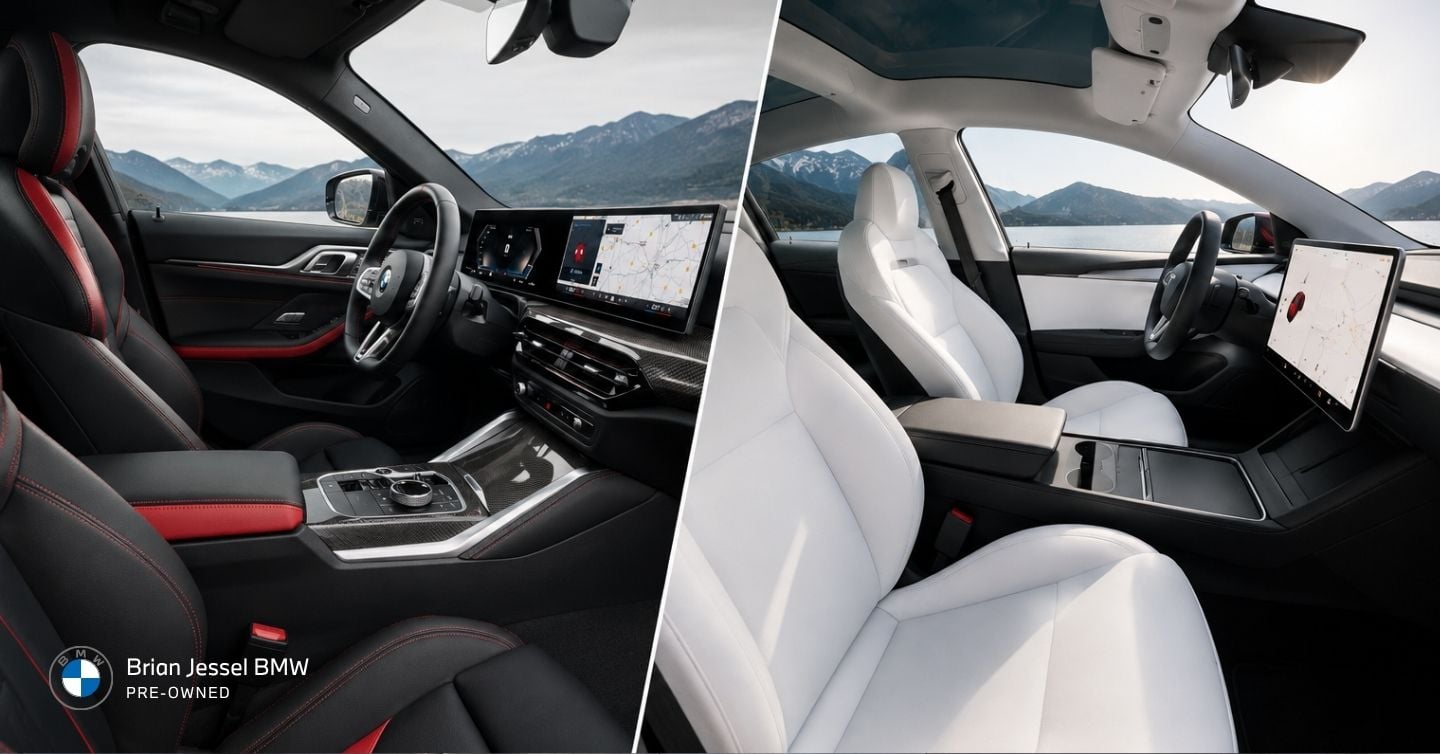
BMW i4 vs Tesla Model 3 Interior Quality and Comfort Comparison
Interior experience is one of the strongest deciding factors in the luxury EV comparison segment.
Used BMW i4 Interior Design and Materials
The BMW i4 emphasizes premium materials, physical controls, and layered cabin design. It prioritizes comfort and insulation, making it more suitable for long-distance driving and highway use in BC, especially on routes with varying weather and road noise conditions.
The cabin layout is built around a driver-focused approach, with tactile controls and high-quality finishes that support a traditional luxury experience in a modern EV platform. Exact materials, seating, trim, and equipment can vary by model year and package.
Used Tesla Model 3 Interior Design and Technology
The Tesla Model 3 uses a minimalist interior where nearly all functions are controlled through a central screen. This creates a software-first ownership experience rather than a traditional luxury cabin feel, with most vehicle interactions handled digitally instead of physical controls.
The design prioritizes simplicity, open cabin space, and integrated software features. Exact comfort, cabin finish, seating, and interior updates can vary by production year and configuration.
Which Pre-Owned EV Feels More Premium?
BMW i4 feels more traditional and luxury-oriented, emphasizing material quality, comfort, and physical interaction with the vehicle. Tesla Model 3 feels more modern and digital, focusing on software integration, minimal design, and screen-based control systems.
The difference depends on whether the buyer values tactile luxury materials and refinement or prefers a streamlined, technology-driven driving environment with fewer physical controls.
BMW i4 vs Tesla Model 3 Technology Features Comparison
Technology is a key factor in BMW EV vs Tesla due to different digital systems, updates, and used-model variations.
BMW iDrive Features in Used BMW i4 Models
The BMW i4 uses BMW’s iDrive system, which combines digital controls with a more traditional vehicle interface. In used models, iDrive may integrate navigation, vehicle settings, charging information, and energy data into one system.
Available display layout, software version, smartphone integration, driver assistance features, and connected services can vary by model year, trim, and equipment package. Buyers should verify features on the specific vehicle.
Tesla Software and Over-the-Air Updates
The Tesla Model 3 relies heavily on its central touchscreen, where many vehicle controls are managed. Over-the-air updates can improve or change certain vehicle features over time without a conventional service visit.
In the used market, this means the ownership experience may depend on software version, vehicle age, paid feature availability, connectivity, and Tesla account status. Buyers should verify which features are active on the specific vehicle before purchase.
Driver Assistance Features Comparison
Both vehicles may offer advanced driver assistance features, but availability and behaviour depend on equipment, software, package selection, and production timing.
For the BMW i4, buyers should confirm which driver assistance packages are installed on the specific vehicle. For the Tesla Model 3, buyers should confirm Autopilot or any paid driver-assistance features through the vehicle screen, Tesla account, or sales documentation.
Smartphone Integration Comparison
BMW i4 models may offer smartphone integration features depending on equipment and software. Tesla Model 3 relies primarily on Tesla’s built-in infotainment and app ecosystem. Buyers should verify phone compatibility, app access, navigation preferences, and subscription-related features on the specific vehicle.
BMW may appeal to drivers who prefer more traditional integration with familiar device features, while Tesla may appeal to drivers who prefer a fully integrated vehicle software environment.
BMW i4 vs Tesla Model 3 Reliability Comparison for Used EV Buyers
Reliability is a major factor in used EV decisions, especially in BC where long-term ownership is common.
Common Reliability Considerations for Used BMW i4 Models
Eligible BMW Certified i4 vehicles are inspected and reconditioned under BMW Canada’s Certified Pre-Owned programme. Buyers considering a non-Certified pre-owned i4 should review the inspection report, service history, battery condition and remaining warranty separately. BMW Certified eligibility depends on factors including vehicle age, mileage and programme requirements.
This dealer-backed ecosystem is important for buyers in British Columbia who prefer structured servicing, transparent vehicle history, and technicians familiar with BMW EV systems and high-voltage components.
Common Reliability Considerations for Used Tesla Model 3 Models
The Tesla Model 3 uses fewer traditional gasoline-vehicle components, which removes some routine maintenance items associated with engines and conventional transmissions. However, long-term reliability still depends on vehicle history, tires, suspension condition, battery warranty status, software status, and previous repairs.
Tesla service is managed through Tesla’s service system, including app-based scheduling, remote diagnostics, software updates, service centres, and Mobile Service where available. Buyers should verify service access and warranty status for their location in British Columbia.
Battery Warranty Coverage Comparison
BMW i4 battery warranty coverage in Canada may provide up to 8 years or 160,000 kilometres for the electric vehicle battery, subject to BMW Canada warranty terms, limitations, and vehicle eligibility. Buyers should confirm warranty status by VIN before purchase.
Tesla Model 3 Battery and Drive Unit warranty coverage varies by configuration. Tesla Canada lists 8-year coverage with kilometre limits depending on variant and includes minimum battery capacity retention during the warranty period. Buyers should confirm the exact warranty coverage for the specific used vehicle. 4 5 6
Service and Repair Availability in BC
BMW i4 benefits from BMW’s established retailer and service structure in British Columbia, including certified service centres such as Brian Jessel BMW. Tesla Model 3 relies on Tesla’s service system, including app-based service management and Mobile Service where available.
Actual repair timing, parts availability, diagnostic needs, and warranty eligibility can vary for either vehicle, so buyers should review service history and inspection results before purchasing.
Learn More: Most Common BMW Repairs in Vancouver
BMW i4 vs Tesla Model 3 Ownership Costs in British Columbia
Ownership cost is a key factor when comparing a used BMW i4 vs used Tesla Model 3 in British Columbia, where insurance, electricity rates, and resale value significantly affect long-term affordability.
| Cost Area | Used BMW i4 | Used Tesla Model 3 |
| Purchase Price | Often Influenced by Luxury Trim, Equipment and CPO Eligibility | Often Influenced by Trim, Production Year and Tesla New-Car Pricing Changes |
| Routine Maintenance | No Engine Oil Service; Tires, Brakes, Filters, Inspections and BMW-Specific Service Remain | No Engine Oil Service; Tires, Brakes, Filters and Tesla-Recommended Maintenance Remain |
| Insurance | Quote The Exact VIN through an Insurer | Quote the Exact VIN through an Insurer |
| Home Charging | Depends on Electricity Rate and Efficiency | Depends on Electricity Rate and Efficiency |
| Public Fast Charging | CCS Networks Plus Compatible Tesla Superchargers for Eligible Updated Vehicles | Direct Tesla Supercharger Access Plus Compatible Public Networks |
| Repair Support | BMW Retailer Network and Certified Programme Where Eligible | Tesla App-Based Service, Service Centres and Mobile Service Where Available |
Used EV Purchase Prices
Used pricing for both the BMW i4 and Tesla Model 3 depends heavily on trim level, mileage, model year, accident history, warranty status, battery condition, and current local inventory.
Used availability varies by market conditions, inventory, trim, mileage, and model year. Buyers should compare current local listings rather than assuming one model is always easier to find or always priced lower.
BMW Certified Pre-Owned inventory, such as vehicles available through Brian Jessel BMW Pre-Owned in Vancouver, may include inspection and warranty-related benefits depending on the vehicle’s eligibility. This can affect value perception beyond the sticker price.
Insurance Costs
In British Columbia, insurance costs depend on rating factors such as driver profile, location, coverage selection, claims history, vehicle value, and repair considerations. There is no fixed insurance advantage for either the BMW i4 or Tesla Model 3. Buyers should request insurance quotes for both specific vehicles before deciding.
Maintenance Costs
Both EVs avoid many gasoline-vehicle maintenance items such as engine oil changes and conventional engine-related servicing. Tesla specifically states that its vehicles do not require traditional oil changes, fuel-system maintenance, spark-plug replacement, or emissions checks, although recommended maintenance still includes items such as tires, filters, and brake care. Both vehicles still require attention to tires, brakes, cabin filters, suspension, software, inspections, and high-voltage systems where needed.
Tesla service is managed through its app-based service system, while BMW service is handled through authorized BMW retailers and service centres. Actual maintenance costs depend on vehicle condition, tire wear, warranty status, usage, and repair history.
Charging Costs
Charging costs in British Columbia depend on whether the vehicle is charged at home or at public stations. Home charging using residential electricity rates is often convenient for daily use, while public charging costs vary by network, speed, location, and pricing structure.
BC Hydro public charging and residential electricity pricing can change over time, so owners should check current BC Hydro rates and public charging prices before estimating long-term charging costs.
The Tesla Model 3 benefits from direct access to Tesla’s charging ecosystem, while an eligible BMW i4 can use compatible CCS public networks, home charging and supported Tesla Superchargers with an approved NACS adapter. The better option depends on where the driver charges most often.
Long-Term Cost of Ownership
Over the long term, ownership cost differences between the BMW i4 and Tesla Model 3 are influenced by purchase price, depreciation, electricity cost, insurance, tire wear, warranty status, repair history, battery condition, and charging habits.
Rather than assuming one model always costs less, buyers should compare the specific vehicle’s price, warranty coverage, service records, tires, accident history, and expected charging pattern.
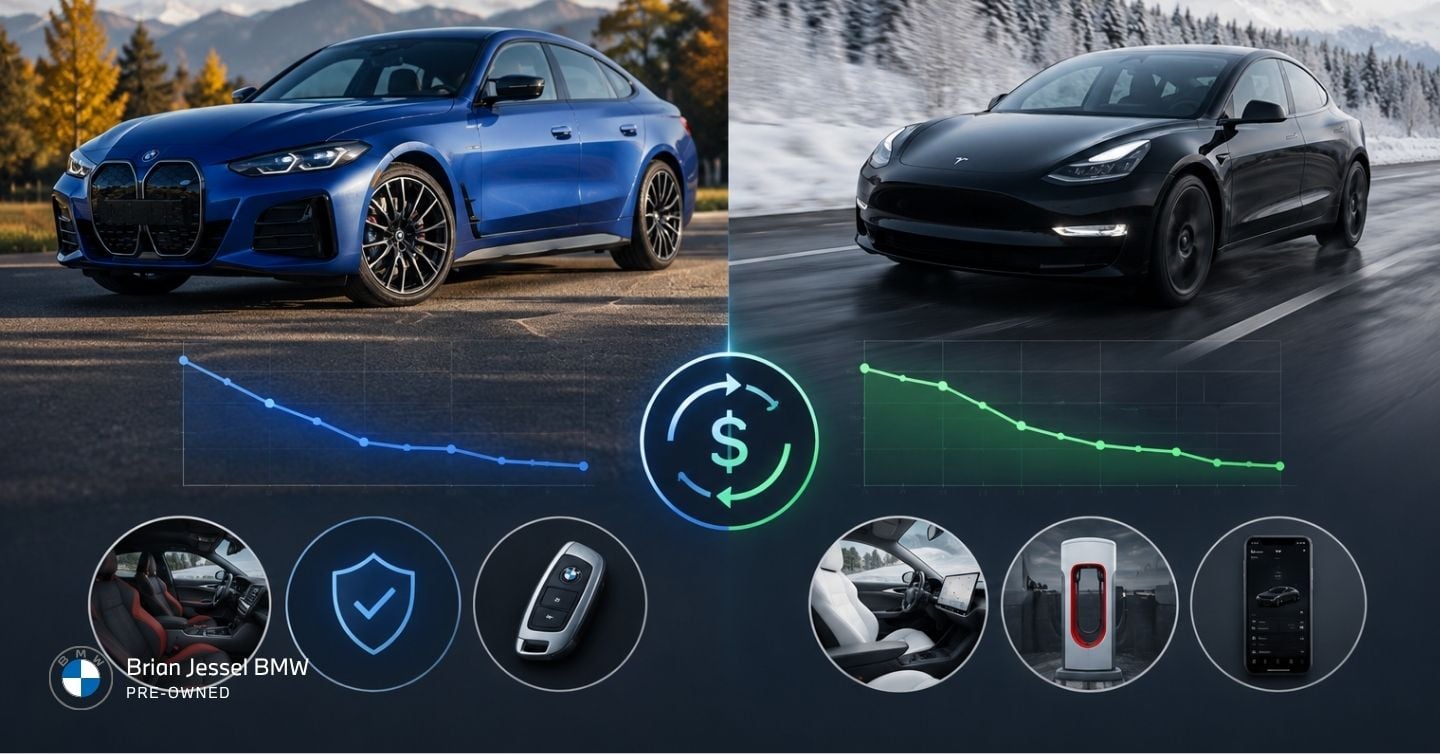
BMW i4 vs Tesla Model 3 Depreciation and Resale Value
Depreciation can materially affect the value of a used EV purchase. For both the BMW i4 and Tesla Model 3, resale value depends on the exact model year, trim, mileage, battery condition, accident history, warranty remaining, equipment and current market supply in British Columbia.
Used BMW i4 Depreciation Considerations
A used BMW i4 may offer an attractive entry point into premium EV ownership because the first owner has already absorbed part of the vehicle’s early depreciation. Resale value can vary significantly between the rear-wheel-drive eDrive40, all-wheel-drive variants and performance-focused M50 models.
Condition, wheel and option packages, service history, battery health, remaining factory coverage and BMW Certified eligibility can all affect how desirable a particular i4 is in the pre-owned market. A well-equipped or Certified example may command a higher asking price, but buyers should still compare it with similar local listings rather than relying on the original MSRP.
Used Tesla Model 3 Depreciation Considerations
A used Tesla Model 3 can also provide substantial savings compared with its original purchase price. However, used values may be especially sensitive to changes in Tesla’s new-vehicle pricing, trim availability, incentives and product updates.
Resale value can also differ between Rear-Wheel Drive, Long Range AWD and Performance versions. Buyers should verify battery and drive-unit warranty remaining, active software features, wheel size, production date, accident history and current new-car pricing before deciding whether a used listing represents good value.
Which EV Holds Its Value Better?
There is no reliable universal winner across every BMW i4 and Tesla Model 3 model year or trim. The Tesla Model 3 may benefit from broad recognition, a large owner base and strong charging-network awareness, while the BMW i4 may appeal to buyers who value traditional luxury, ride refinement, dealership support and BMW Certified eligibility.
For BC shoppers, the most useful comparison is the difference between:
- the current used asking price;
- the price of a comparable new vehicle;
- warranty coverage remaining;
- battery and overall vehicle condition;
- equipment and trim;
- and likely resale demand in the local market.
A lower-priced vehicle is not automatically the better value. A newer or better-maintained EV with stronger warranty coverage, desirable equipment and verified battery condition may provide a better ownership proposition even at a higher purchase price.
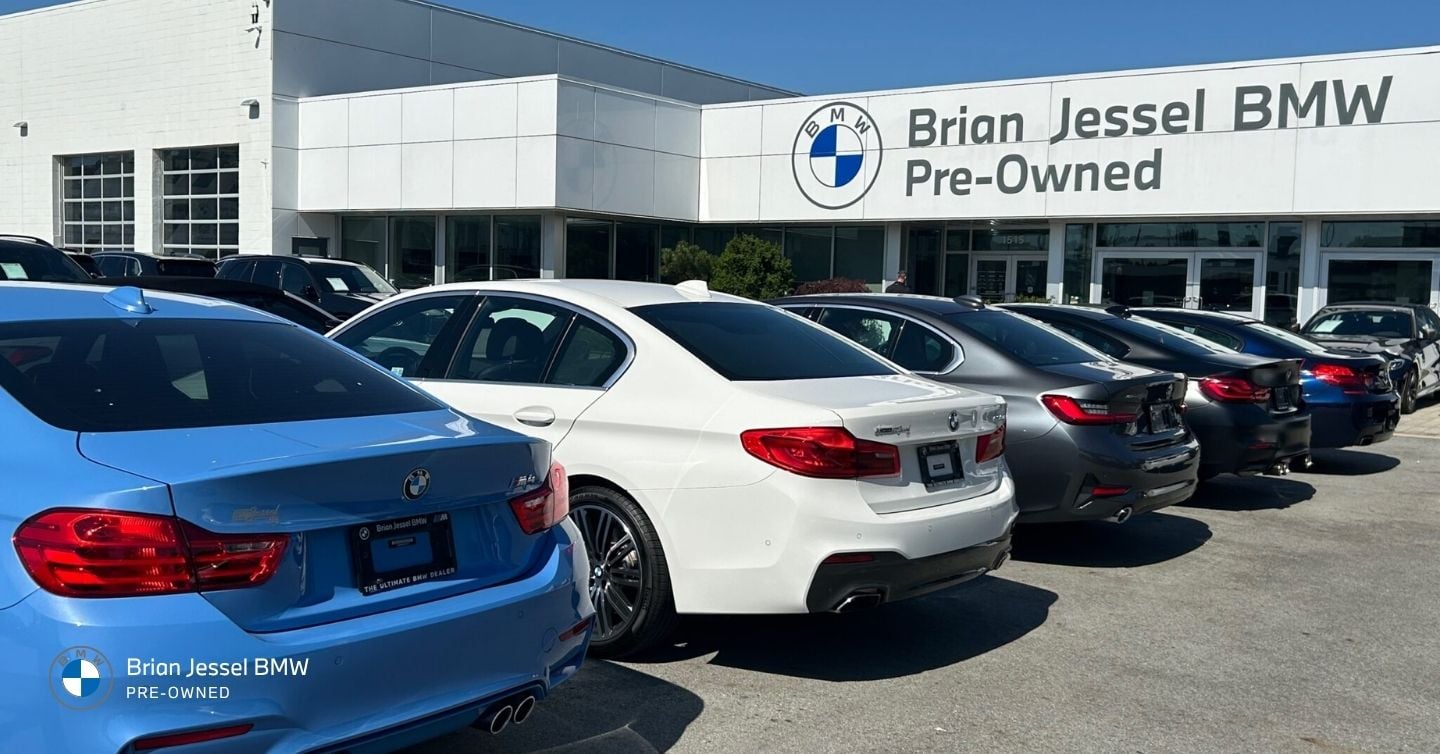
Why Many BC Drivers Choose a Pre-Owned BMW i4 from Brian Jessel BMW
Many Vancouver buyers consider a pre-owned BMW i4 from Brian Jessel BMW because the dealership offers access to BMW-focused sales and service support, used vehicle inventory, and Certified Pre-Owned options where eligible.
Eligible BMW Certified vehicles are selected, inspected and reconditioned under BMW Canada’s Certified Pre-Owned programme. BMW Canada also lists a 360-degree vehicle check that includes a battery health report and a minimum of one year of applicable warranty coverage, subject to programme eligibility and terms.
Buyers should confirm the inspection report, battery-related diagnostics, warranty status, and service history for the specific vehicle before purchase.
This supports buyers who prefer dealership-backed transparency when shopping in the pre-owned EV market in British Columbia and the wider Vancouver region.
BMW i4 vs Tesla Model 3: Which Used EV Should You Buy?
Choosing between a used BMW i4 vs used Tesla Model 3 in British Columbia depends on ownership priorities, not just specs. Both are strong BC used EV options but serve different needs. BMW i4 suits luxury and dealer support. Tesla Model 3 suits charging convenience and software-focused driving.
Choose a Used BMW i4 If:
A used BMW i4 suits drivers who prefer traditional luxury, with a refined interior, strong cabin insulation, and physical controls that feel more premium on BC highways and city roads. Ride comfort is also a key advantage on longer and uneven routes.
Eligible vehicles may benefit from BMW Certified Pre-Owned programme support and dealership service networks like Brian Jessel BMW in Vancouver, which add confidence in long-term ownership.
Choose a Used Tesla Model 3 If:
A used Tesla Model 3 is better for drivers who prioritize charging convenience and software features. Tesla’s integrated Supercharger access can make long-distance route planning more straightforward for many drivers.
Its software-first system with over-the-air updates also appeals to drivers who prefer a modern, screen-based driving experience.
Best Overall Choice for BC Drivers
In overall terms, there is no universal winner. The BMW i4 tends to appeal more to luxury-focused buyers, while the Tesla Model 3 appeals more to technology and infrastructure-focused drivers in British Columbia.
The best choice depends on the specific vehicle, trim, warranty status, service history, charging access, winter tire setup, and whether ownership experience or charging ecosystem matters more in daily use.
FAQs
1. Is the BMW i4 better than the Tesla Model 3?
Neither is universally better. The BMW i4 focuses on luxury and comfort, while the Tesla Model 3 focuses on software, efficiency, and charging access.
2. Is a used BMW i4 reliable?
A used BMW i4 can be a strong option when it has a clean history, remaining warranty coverage, documented inspection results, and proper service records. Buyers should verify the specific vehicle before purchase.
3. Is a used Tesla Model 3 reliable?
A used Tesla Model 3 can be a strong option, but buyers should check battery warranty status, service history, software status, accident history, tire condition, and charging equipment condition.
4. Which EV has lower maintenance costs?
Both EVs avoid many gasoline-vehicle maintenance items, but actual cost depends on tires, brakes, inspections, repairs, warranty status, software support, and service needs.
5. Which EV has better battery life?
Both offer long battery warranties in Canada. Actual lifespan depends on usage and charging habits.
6. Can I charge a BMW i4 at Tesla chargers?
Eligible model-year 2022 and newer BMW i4 vehicles can use compatible Tesla Superchargers with a BMW-approved NACS DC adapter after receiving the required software update. Not every Tesla Supercharger is compatible, so owners should check the My BMW app or vehicle navigation before relying on a station.
7. Does the BMW i4 feel more luxurious than the Tesla Model 3?
Many buyers may find the BMW i4 more traditionally luxurious because of its layered cabin design, greater use of physical controls, seating presentation and emphasis on ride refinement. The Tesla Model 3 takes a more minimalist, screen-centred approach, so the preferred interior depends on the buyer’s priorities.
8. Which EV performs better in BC winters?
Both can be suitable for BC winter driving when equipped with proper winter tires. Actual winter performance depends on tires, drivetrain, battery temperature, road conditions, route, and driving habits.
9. Should I buy a Certified Pre-Owned BMW i4?
A Certified Pre-Owned BMW i4 may appeal to buyers who value BMW programme inspections, a battery health report, documented reconditioning and applicable warranty coverage. Buyers should confirm that the specific i4 is BMW Certified and review the exact coverage before purchase.
10. What should I check before buying a used Tesla Model 3?
Battery health, software version, warranty remaining, accident history, and charging port condition are key checks.
Source:
- BC Hydro — Residential Electricity Rates
- BC Hydro — Time-of-Day Pricing
- BC Hydro — EV Charging and Your Electricity Bill
- BMW Canada — Electric-Car Battery Technology
- Tesla Canada — Vehicle Warranty
- Tesla Canada — Model 3
Additional Sources
BMW i4 Information
- BMW Canada — BMW i4 Overview
- BMW Canada — BMW i4 Technical Data
- BMW Canada — BMW Electric-Vehicle Range
- BMW Canada — Electric-Vehicle Charging
- BMW Canada — Charging at Tesla Superchargers
- BMW Group Canada — The 2022 BMW i4 eDrive40 and i4 M50
Tesla Model 3 Information
- Tesla Canada — Vehicle Maintenance
- Tesla Canada — Supercharger Locations
- Tesla Canada — Pre-Owned Vehicles
- Tesla Canada — Ordering a Pre-Owned Tesla
BMW Certified Pre-Owned, Inventory and Service
- BMW Canada — Pre-Owned Electric Cars and Battery Health
- BMW Canada — Certified Pre-Owned Programme
- BMW Canada — Vehicle and Parts Warranties
- Brian Jessel BMW — BMW i4 Inventory
- Brian Jessel BMW — Pre-Owned Inventory
- Brian Jessel BMW — Service Centre