Taxes and Fees When Buying a Used Car in BC: PST, Documentation and Registration
Taxes and Fees When Buying a Used Car in BC: PST, Documentation and Registration
Posted on November 4, 2026
In B.C., the tax on a used car depends on who sells it, the vehicle's taxable value and whether special vehicle rules apply. For an ordinary passenger vehicle bought from a GST-registered dealership, the buyer generally pays 5% GST plus B.C. PST from 7% to 20%. In a normal private sale, GST generally does not apply and PST is usually 12%, 15% or 20%, depending on the taxable value.
For an ordinary non-ZEV passenger vehicle with a taxable purchase price below $55,000, a dealership transaction generally has 7% PST + 5% GST, while a normal private sale generally has 12% PST and no GST. Private-sale PST can also be based on the vehicle's Canadian Black Book average wholesale value when that value is higher than the price paid. 1 2 3 4
Tax treatment can vary when a transaction involves an exemption, unusual trade-in, high-value vehicle or another special circumstance. Buyers can confirm their own situation with the B.C. government, CRA, ICBC or an Autoplan broker.
Quick Answer: For many ordinary used passenger vehicles below $55,000, the headline sales-tax total is 12% either way: 7% PST + 5% GST at a dealership, or 12% PST in a normal private sale. The calculation changes for higher-value vehicles, dealer-sold ZEVs, trade-ins and some private-sale valuation situations.
Last updated: November 2026
Vancouver shoppers comparing their options can also browse current pre-owned inventory while working out an after-tax budget.
How Much Is the Sales Tax on a Used Car in BC?
There is no single sales-tax percentage for every used car in B.C. Dealership purchases generally combine 5% GST with the applicable B.C. PST rate, while a normal private sale generally has no GST and uses the private-sale PST schedule.
- Dealership: 5% GST plus PST from 7% to 20% for an ordinary passenger vehicle, based on the applicable purchase-price tier.
- Private Sale: Generally no GST; private-sale PST is generally 12% below $125,000, 15% from $125,000 to $149,999.99, and 20% at $150,000 or more.
- Higher-Value Vehicle: Crossing a PST threshold changes the rate applied to the taxable amount; it is not a marginal tax bracket.
- Dealer-Sold ZEV: Temporary higher PST thresholds remain in effect through February 22, 2027.
BC Used Car Taxes: Dealer vs Private Sale at a Glance
Dealer and private transactions can produce different tax results even when the agreed vehicle price is the same. Dealer purchases use the GST-registrant PST schedule, while private sales can use the greater of the purchase price and Canadian Black Book average wholesale value.
BC Used Car Taxes and Fees: Dealership vs Private Sale |
|||
| Tax or Cost | Dealership Purchase | Private Purchase | When / Where Paid |
| GST | 5% Generally Applies | Generally Not Applicable | At Sale |
| PST Under $55,000 | 7% Ordinary Passenger Vehicle | 12% | Dealer / Autoplan |
| Higher PST Rates | Up to 20% | Up to 20% | At Sale / Registration |
| Private Valuation Rule | Not Applicable | Price or Wholesale Value | Autoplan |
| Trade-In Effect | May Reduce Tax Base | May Reduce Purchase Price | Transaction |
| Dealer Fees | Dealer-Set | Not Applicable | Purchase Agreement |
| VSA Levy Recovery | $10 if Passed Through | Not Applicable | Purchase Agreement |
| Title / Licence Transfer | $28 | $28 | Registration |
| Standard Plate | $18 if Needed | $18 if Needed | Autoplan |
| Basic Insurance | Required; Cost Varies | Required; Cost Varies | Autoplan |
The Motor Vehicle Fees Regulation sets the transfer-of-title-or-licence fee at $28 and a standard number plate at $18. The separate $18 registration fee applies to initial registration and certain re-registration situations rather than automatically to every ordinary used-car transfer. 7
PST on Used Cars in BC: Dealer vs Private Sale
PST on used cars in B.C. depends on how the vehicle is acquired and its taxable value. A dealer sale uses the GST-registrant PST schedule, while a private sale generally starts at 12% and can also be subject to the province's average-wholesale-value rule.
PST When Buying a Used Car from a Dealership in BC
For an ordinary passenger vehicle purchased from a GST-registered dealer, the current PST rate is based on the purchase price used for PST purposes. The dealer charges and collects the applicable PST as part of the transaction.
BC PST Rates for Used Passenger Vehicles Bought From a Dealership |
|
| Purchase Price | Dealer PST Rate |
| Under $55,000 | 7% |
| $55,000–$55,999.99 | 8% |
| $56,000–$56,999.99 | 9% |
| $57,000–$124,999.99 | 10% |
| $125,000–$149,999.99 | 15% |
| $150,000 and Over | 20% |
B.C. states that the PST purchase price can include documentation charges, service charges, environmental fees, qualifying delivery charges, mandatory warranties or service contracts and other amounts paid to purchase the vehicle. GST, federal luxury tax, ICBC insurance premiums, licensing fees and ICBC transfer fees are excluded from the PST purchase-price definition. 1
The dealership's written sales agreement must show the actual selling price, taxes and an itemized list of other charges for which the buyer is responsible. 9
PST When Buying a Used Car from a Private Seller in BC
For a private sale of a passenger vehicle, PST is generally 12% below $125,000, 15% from $125,000 to $149,999.99, and 20% at $150,000 or more. A normal private sale by someone who is not a GST/HST registrant generally does not have GST.
For a typical B.C.-registered private purchase:
- Confirm the seller is the registered owner and that the VIN matches the registration.
- Complete the Transfer/Tax Form APV9T with the seller.
- Obtain the seller's signed original Vehicle Registration APV250.
- Take both documents to an Autoplan broker.
- Pay the applicable PST and transfer costs.
- Register the vehicle in your name within 10 days of purchase. 8
How PST Is Calculated on a Used Car in BC
For most private vehicle sales in B.C., PST is calculated on the greater of the purchase price or the vehicle's average wholesale value. B.C. defines average wholesale value as the value obtained from the Canadian Black Book valuation guide.
If the actual vehicle value is lower than the Canadian Black Book average wholesale value, a buyer can provide a completed Motor Vehicle Appraisal Form FIN 320. When both the appraised value and purchase price are below the average wholesale value, PST is calculated on the greater of the appraisal and purchase price.
Example: If you pay $30,000 privately for a passenger vehicle whose average wholesale value is $34,000, and no exemption or appraisal rule changes the result, 12% PST would be calculated on $34,000. The PST would be $4,080. 2
Do You Pay GST on a Used Car in BC?
At a dealership, generally yes. CRA states that GST/HST generally applies when a specified motor vehicle is purchased from a GST/HST registrant such as a dealership. The GST rate in British Columbia is currently 5%.
In a normal private sale, generally no. CRA states that GST/HST does not generally apply when the vehicle is bought privately from someone who is not a GST/HST registrant. B.C. PST can still be due when the vehicle is transferred and registered. 3 4
When the 15% or 20% B.C. PST rate applies to a vehicle on which GST is payable, B.C. states that the PST amount is included in the consideration used to calculate GST. For those high-value transactions, simply adding “5% GST + the PST rate” does not produce the exact tax bill.
Does a Trade-In Reduce the Tax on a Used Car in BC?
Yes. An eligible trade-in can reduce the taxable amount on a dealership purchase, and B.C. also permits a qualifying trade-in to reduce the purchase price for PST purposes in a private transaction when the stated conditions are met. The requirements differ, so not every exchange automatically receives the reduction.
At a dealership, the PST rate is determined from the vehicle's purchase price before the trade-in deduction, while an eligible trade-in can reduce the taxable purchase price used to calculate the PST owing.
For GST, CRA states that when a dealer accepts a personal-use trade-in from a person who does not have to charge GST/HST, GST/HST is generally charged on the net amount after the trade-in allowance. 10
How a Trade-In Changes PST and GST on a $60,000 Used Car |
||
| $60,000 Dealer Purchase | No Trade-In | $20,000 Trade-In |
| PST Rate | 10% | 10% |
| PST Tax Base | $60,000 | $40,000 |
| PST | $6,000 | $4,000 |
| GST Tax Base | $60,000 | $40,000 |
| GST | $3,000 | $2,000 |
| Total Sales Tax | $9,000 | $6,000 |
This simplified example assumes an ordinary passenger vehicle, a qualifying personal-use trade-in, no additional taxable dealer charges and no special exemption. Under those assumptions, the $20,000 trade-in reduces the sales tax by $3,000. 10
In a private transaction, B.C. also allows the value of qualifying goods accepted as a trade-in to reduce the purchase price for PST purposes when the applicable tax requirements are met. Private-sale buyers still need to consider the average-wholesale-value rules.
Buyers considering a trade-in can request a trade-in appraisal from Brian Jessel BMW Pre-Owned before setting their final purchase budget.
Documentation Fees and Other Dealer Charges on a Used Car in BC
A documentation or administration fee is not a fixed B.C. government fee. VSA states that dealer fees are permitted, but the dealer must disclose them during the price discussion and cannot add an undisclosed fee after the final price has already been negotiated and agreed to.
- Documentation / Administration Fee: Dealer-set; it must be disclosed properly and must not be presented as a government fee when it is not.
- Inspection / Pre-Delivery Charge: If the buyer must pay it, the charge must be reflected in the dealer's pricing and disclosure obligations. 5
- VSA Transaction Levy: Since April 1, 2026, VSA charges licensed dealers a fixed $10 levy for each qualifying consumer vehicle transaction. Dealers may pass the $10 through to the buyer, but it must be separately itemized and cannot be marked up. Applicable taxes apply if it is passed through. 6
- New-Tire Eco Fee: Tire Stewardship BC currently lists the Passenger and Light Truck tire Advance Disposal Fee at $6.50 per new tire, rising to $7.00 on January 1, 2027. The fee relates to new tires sold under the program and should not be treated as an automatic charge on every used-car purchase. 11
- Optional Products: Optional warranties, protection packages or other products should be identified in the transaction documents rather than hidden inside an unexplained fee. 9
Before signing, ask for the vehicle price, each dealer-set charge, the VSA levy if passed through, optional products, taxes and ICBC-related costs to be shown clearly.
ICBC Registration, Transfer and Insurance Costs for a Used Car
Ownership transfer, plates, licensing and insurance are separate from GST and PST. B.C.'s Motor Vehicle Fees Regulation sets $28 for a transfer of title or licence and $18 for a standard number plate when a new plate is required.
ICBC Transfer, Plate and Insurance Costs for a Used Car in BC |
|||
| Cost or Step | When It Applies | Dealership Purchase | Private Purchase |
| Title / Licence Transfer | Ownership Transfer | $28 | $28 |
| Standard Plate | New Plate Required | $18 | $18 |
| Vehicle Licence | When Licensing | Varies | Varies |
| Basic Insurance | Before Normal Road Use | Required | Required |
| Optional Insurance | Buyer Choice | Varies | Varies |
Annual passenger-vehicle licence fees vary with vehicle net weight under the Motor Vehicle Fees Regulation, so there is not one flat licence amount that applies to every used car.
ICBC Basic Autoplan is mandatory. Insurance cost varies with factors including driving experience, crash history, listed drivers, where the vehicle is located and how it is used; optional coverage can also be affected by the vehicle's age, make, model, safety features and repair or replacement costs. 12
The 10-day transfer rule does not create a general 10-day period to drive uninsured. ICBC permits some buyers to use valid B.C. plates from a previous vehicle for up to 10 days only when all of its stated conditions are met and the required documents are carried in the vehicle. 8
Used Car Paperwork and Deadlines in BC: Dealer vs Private Sale Checklist
ICBC states that a newly purchased vehicle must be registered in the licence holder's name at an Autoplan broker within 10 days of purchase.
Buying From a Dealership
- Review the written sales agreement for the vehicle price, GST, PST and itemized charges.
- Confirm the VIN, model year and odometer reading.
- Review the trade-in amount and deposit terms if applicable.
- Review the required used-vehicle declarations.
- Complete registration, licensing and insurance.
- Make sure registration is completed within 10 days.
ICBC says dealership staff can help with registration, insurance and licensing; the dealer may have an on-site Autoplan broker or direct the buyer to a nearby broker. 8
For a used vehicle, VSA says the sales agreement must contain required transaction information and declarations, including selling price, taxes, additional charges, odometer information, certain prior uses, prior registration outside B.C. and damage requiring more than $2,000 in repairs. 9 13
Buying From a Private Seller
- Match the seller's identification to the registration.
- Confirm the VIN matches the vehicle and registration.
- Check vehicle history and liens.
- Consider a professional mechanical inspection.
- Obtain the signed original APV250 Vehicle Registration.
- Complete the APV9T Transfer/Tax Form with original signatures.
- Take the documents to an Autoplan broker.
- Pay applicable PST and transfer costs.
- Register within 10 days.
- Arrange the required insurance and licensing before normal road use.
ICBC recommends checking the registration and vehicle history and having a serious prospective purchase inspected. For liens, the B.C. Personal Property Registry currently lists a $10 fee for a Personal Property Registry search conducted by government staff; other access methods can have different charges. 14
How Much Will a Used Car Cost After Taxes and Fees in BC? (Examples)
The three price points below are chosen to show a typical lower-price calculation and the tax change around B.C.'s $55,000 dealer PST threshold. They are planning examples rather than prices attributed to specific vehicles. They assume an ordinary non-ZEV passenger vehicle, no trade-in, no dealer-set documentation fee, no VSA levy passed through, no financing charge, no insurance premium and no new plate.
Each example includes the $28 title/licence transfer fee. For private sales, the stated purchase price is assumed to be at least the vehicle's applicable average wholesale value.
Used Car Cost Examples After Taxes and Transfer Fees in BC |
||||
| Purchase Price | Dealer Taxes | Dealer Total | Private PST | Private Total |
| $50,000 | $6,000 | $56,028 | $6,000 | $56,028 |
| $55,500 | $7,215 | $62,743 | $6,660 | $62,188 |
| $60,000 | $9,000 | $69,028 | $7,200 | $67,228 |
- $50,000 vehicle: 7% PST = $3,500; 5% GST = $2,500; total tax = $6,000
- $55,500 vehicle: 8% PST = $4,440; 5% GST = $2,775; total tax = $7,215
- $60,000 vehicle: 10% PST = $6,000; 5% GST = $3,000; total tax = $9,000
For the private-sale examples, 12% PST applies under the assumptions used above. 1 2 4
These are planning examples rather than purchase quotes. Actual totals can change because of taxable dealer charges, a VSA levy passed through by the dealer, trade-ins, private-sale valuation rules, insurance, licensing, financing or optional products.
How to Estimate Your Own Used-Car Purchase Cost
- Start with the vehicle's taxable price. For a private sale, check whether B.C.'s average-wholesale-value rule applies.
- Calculate the applicable taxes. Use the correct dealer or private-sale PST rate, add GST where required, and account for any qualifying trade-in.
- Add the remaining costs. Include applicable dealer charges, transfer and licensing fees, insurance and any optional products.
Buyers working from a monthly budget can review BMW financing options through Brian Jessel BMW Pre-Owned after estimating the tax and registration costs above.
Dealership vs Private Seller in BC: Which Costs More Overall?
Neither route is automatically cheaper in every case. For an ordinary passenger vehicle below $55,000, the headline tax can total 12% either way—7% PST plus 5% GST at a dealer versus 12% PST in a normal private sale, but dealer fees, trade-ins, higher PST tiers and private-sale valuation rules can change the result.
Dealership vs Private Seller in BC: Cost and Buyer Protection Comparison |
||
| Cost / Risk Factor | Licensed Dealership | Private Seller |
| GST | Generally Applies | Generally Does Not |
| PST | Dealer Rate Schedule | Private Rate Schedule |
| Dealer Fees | Possible; Disclosed | None |
| Trade-In | Tax Rules Available | Tax Rules Available |
| Registration Help | Dealer Can Help | Buyer Uses Autoplan |
| Lien Protection | Dealer Obligations Apply | Buyer Should Search |
| Required Declarations | Yes | Dealer Rules Do Not Apply |
| Inspection | Review Available Information | Buyer Should Arrange |
| Financing | May Be Offered | Buyer Arranges Separately |
Licensed B.C. dealers operate under consumer-protection rules requiring specified disclosures and declarations. VSA states that dealers must disclose specified prior uses, prior registration outside B.C., odometer accuracy and certain prior damage; private-sale buyers need to perform their own checks.
For a private purchase, VSA recommends confirming the seller's identity and registration information and obtaining history information; lien checks are particularly important. 13
Compare the after-tax amount, confirmed fees, trade-in value and the work required to check the vehicle and ownership, not only the advertised price. Shoppers who decide a dealership purchase suits them can contact Brian Jessel BMW Pre-Owned to discuss a vehicle.
PST on Luxury and High-Value Used Vehicles in BC
Higher-value passenger vehicles can move into a higher B.C. PST tier. For ordinary passenger vehicles purchased from a GST registrant, the PST rate starts increasing at $55,000 and reaches 15% at $125,000 and 20% at $150,000.
BC PST Rates for Luxury and High-Value Used Vehicles |
||
| Taxable Vehicle Value | Dealer PST | Private PST |
| Under $55,000 | 7% | 12% |
| $55,000–$55,999.99 | 8% | 12% |
| $56,000–$56,999.99 | 9% | 12% |
| $57,000–$124,999.99 | 10% | 12% |
| $125,000–$149,999.99 | 15% | 15% |
| $150,000 and Over | 20% | 20% |
For private sales, PST may be based on the greater of the purchase price or Canadian Black Book average wholesale value, so the agreed price does not always determine the tax base.
Threshold example: A dealer-sold passenger vehicle priced at $54,999 has 7% PST, or $3,849.93. At $55,000, the rate rises to 8%, or $4,400, because the higher rate applies to the full taxable amount.
At $125,000 and above, special GST rules also apply when the vehicle is subject to 15% or 20% PST, so buyers should use the exact government calculation rather than simply adding the two percentages.
Dealer-sold passenger ZEVs currently have higher PST thresholds, with the temporary schedule remaining in effect until February 22, 2027. The former PST exemption for qualifying used ZEVs ended after April 30, 2025, so used ZEVs should not be assumed to be PST-exempt.
The federal luxury tax is separate from B.C. PST and, in most cases, does not apply to a used vehicle that has already been registered in Canada. 15
Buyers shopping near these thresholds can compare current pre-owned BMW inventory before setting their final after-tax budget.
Buying a Pre-Owned Car in Vancouver at Brian Jessel Pre-Owned
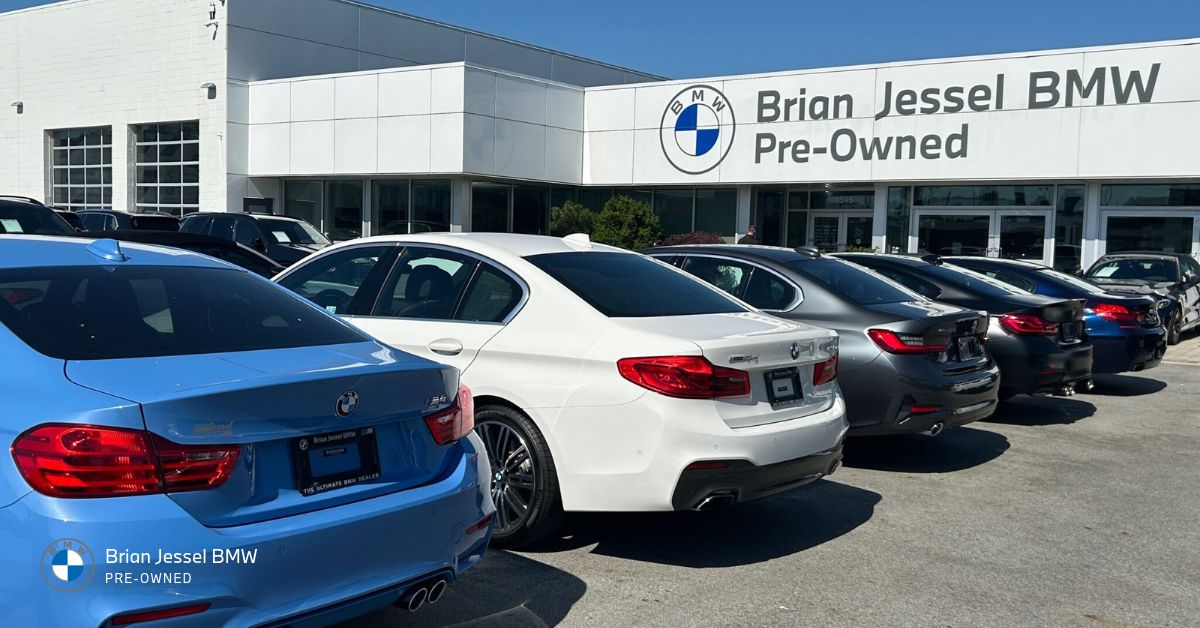
At Brian Jessel BMW Pre-Owned, we help Vancouver buyers compare pre-owned vehicles, trade-in options and financing at 1515 Boundary Road, Vancouver, BC V5K 5C4.
Buyers can:
- Browse our current pre-owned inventory and compare vehicles within their budget.
- Request a trade-in appraisal if a current vehicle will be part of the purchase.
- Review BMW financing options when planning the purchase.
Before signing, review the itemized purchase figures for the vehicle price, GST, PST, applicable dealer charges, the VSA levy if passed through, ICBC-related costs and any optional products.
If you have questions about the total cost of a vehicle you are considering, contact Brian Jessel BMW Pre-Owned to discuss the purchase, trade-in and financing options that apply to you.
Used Car Taxes and Fees in BC: Frequently Asked Questions
1. How much is the sales tax on a used car in BC?
For an ordinary passenger vehicle below $55,000 bought from a GST-registered dealer, the current taxes are generally 7% PST plus 5% GST. In a normal private sale below $125,000, GST generally does not apply and PST is 12%. Higher-value vehicles and dealer-sold ZEVs can use different PST tiers.
2. Do you pay PST on a used car bought from a private seller in BC?
Yes, unless a specific exemption applies. For a private passenger-vehicle sale, PST is generally 12% below $125,000, 15% from $125,000 to $149,999.99 and 20% at $150,000 or more.
3. Do you pay GST when buying a used car privately?
Generally no, when the private seller is not a GST/HST registrant. CRA states that GST/HST does not generally apply in that situation, although B.C. PST can still be payable.
4. How is PST calculated on a private sale?
B.C. generally calculates PST on the greater of the purchase price and Canadian Black Book average wholesale value. When the required conditions are met, a FIN 320 appraisal can affect the value used.
5. Does a trade-in reduce the tax on a used car in BC?
It can. A qualifying dealership trade-in can reduce the taxable amount for PST, while the PST rate is based on the price before the trade-in deduction. CRA also generally applies GST to the net amount for a personal-use trade-in from someone who does not have to charge GST/HST. B.C. also has trade-in rules for private transactions.
6. Is the tax higher on expensive or luxury used vehicles?
It can be. Dealer PST on an ordinary passenger vehicle rises through 8%, 9%, 10%, 15% and 20% as the applicable price thresholds are crossed. Private-sale passenger vehicles are generally 12% below $125,000, 15% from $125,000 to $149,999.99 and 20% at $150,000 or more.
7. What dealer fees can I expect on top of the price?
There is no single government-set documentation fee. VSA allows dealer fees but requires proper disclosure. Since April 1, 2026, the VSA also charges dealers a fixed $10 Transaction Levy on qualifying consumer transactions; a dealer may pass that amount through if it is separately itemized.
8. How long do I have to register a used car after buying it?
ICBC states that a newly purchased vehicle must be registered in the licence holder's name at an Autoplan broker within 10 days of purchase.
9. What paperwork do I need to buy a used car in BC?
For a typical private B.C. sale, ICBC requires the seller's signed original APV250 Vehicle Registration and a completed APV9T Transfer/Tax Form with original signatures. Dealer purchases use a written sales agreement with required pricing, tax and vehicle information, and dealership staff can help with registration, licensing and insurance.
10. Do I need insurance before I drive a used car home?
For normal road use, valid insurance is required. ICBC Basic Autoplan is mandatory; the 10-day registration rule does not create a general 10-day uninsured-driving period. A limited substitute-plate rule exists when all ICBC conditions are met.
Source:
- B.C. Ministry of Finance — Bulletin PST 116: Motor Vehicle Dealers and Leasing Companies
- B.C. Ministry of Finance — Bulletin PST 308: PST on Vehicles
- Canada Revenue Agency — GST/HST and Motor Vehicles
- Canada Revenue Agency — GST/HST Calculator and Rates
- Vehicle Sales Authority of B.C. — Understanding Dealer Fees
- Vehicle Sales Authority of B.C. — $10 Transaction Levy
- B.C. Laws — Motor Vehicle Fees Regulation
- ICBC — Steps to Buying a Used Vehicle
- Vehicle Sales Authority of B.C. — Transaction Tips
- Canada Revenue Agency — GST/HST Special Cases: Trade-Ins
- Tire Stewardship BC — Retailer Hub / Advance Disposal Fee
- ICBC — What Determines Insurance Costs?
- Vehicle Sales Authority of B.C. — Buying Used / Buying Privately
- B.C. Registry Services — Personal Property Registry Fees
- Canada Revenue Agency — Luxury Tax on Subject Vehicles