Should You Buy a Used BMW EV in Vancouver?
Should You Buy a Used BMW EV in Vancouver?
Posted on May 28, 2026
Buying a used BMW EV in Vancouver can make sense in 2026, especially for drivers who want a luxury electric vehicle at a lower price than new. The right decision depends on battery health, remaining warranty, charging access, real-world range, service history, and whether the model fits your daily driving.
A used BMW EV should be reviewed as both a luxury vehicle and an electric vehicle. Battery condition, software status, charging history, tires, warranty coverage, and service records all affect long-term ownership.
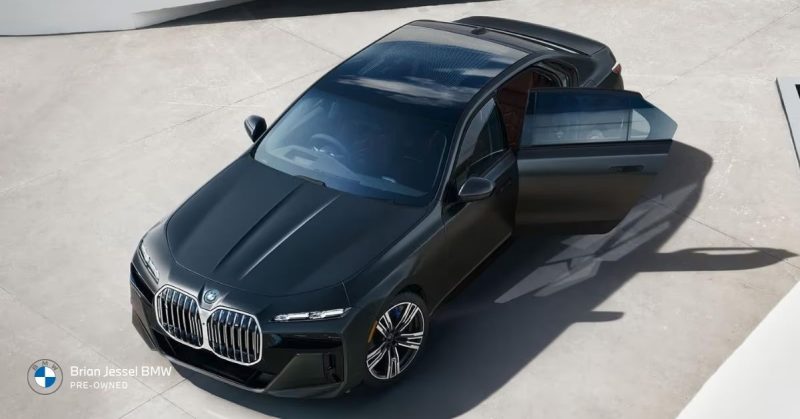
Is Buying a Used EV a Good Idea in 2026?
A used EV can be a smart purchase when the vehicle has been properly inspected and its range fits your routine. The main advantage is financial: used EV pricing has become more competitive as more electric vehicles enter the second-hand market.
For buyers, that can create opportunities to purchase a luxury EV at a noticeably lower price than a comparable new model while still retaining many modern technology and safety features.
Compared with a new EV, a used EV can offer:
- Lower purchase pricing
- Less exposure to early depreciation
- Many of the same technology and safety systems
- Lower replacement value for insurance purposes
- Reduced operating costs compared with many gas vehicles
Compared with a gas-powered luxury vehicle, EVs usually require less routine maintenance because there are fewer moving mechanical parts.
Technology has also improved noticeably in the past five years. Many used BMW EVs now include features that were once limited to new luxury vehicles, including wireless Apple CarPlay, advanced driver assistance systems, over-the-air software updates, adaptive regenerative braking, and larger curved infotainment displays. That means buyers can still access modern EV technology without paying current new-vehicle pricing.
Federal EV incentives in Canada should still be reviewed carefully because eligibility depends on vehicle pricing, manufacturing origin, program rules, and vehicle type. Canada’s Electric Vehicle Affordability Program (EVAP), launched in February 2026, offers incentives of up to $5,000 for eligible battery-electric vehicles and up to $2,500 for eligible plug-in hybrid vehicles. However, most used BMW EVs will not qualify because the program primarily applies to eligible new vehicles. 1
In British Columbia, the Go Electric passenger vehicle rebate program is currently paused, although home charger rebates and other EV-related programs may still apply depending on property type and eligibility requirements.
Learn More: BMW EV Maintenance Tips for Long-Term Performance
Why You Should Buy a Used BMW EV in Vancouver
Vancouver is one of Canada’s more established EV markets because of its charging infrastructure, mild climate, and dense urban driving patterns. A used BMW EV can work well for commuting through downtown Vancouver, Richmond, Burnaby, North Vancouver, or the Tri-Cities, where stop-and-go driving often benefits EV efficiency.
B.C. reported more than 8,800 public charging ports as of January 1, 2026, including more than 2,400 fast-charging ports. 2
Strong Value & Depreciation Advantage
Luxury EVs often lose value faster during the first three to five years because of rapid software development, battery improvements, and high original pricing. For used buyers, that creates an opportunity to purchase a BMW EV with premium interior materials, advanced safety technology, and strong performance at a lower entry cost.
This depreciation window is especially important for luxury EV buyers in Vancouver. A 3-to-5-year-old BMW i4 or iX may still feel modern inside while costing significantly less than a comparable new luxury EV. Buyers avoid much of the early depreciation while still getting access to updated BMW technology and battery systems.
Lower Ownership Costs Compared to Gas Cars
BMW EVs usually require less routine mechanical maintenance than gasoline BMWs. Owners avoid oil changes, spark plugs, engine belts, exhaust repairs, and many fuel-system issues.
Electricity costs should still be reviewed carefully. As of April 1, 2026, BC Hydro lists public Level 2 charging at $0.3083 per kWh and fast charging at $0.3969 per kWh before tax. BC Hydro also applies an idle fee after the grace period at many fast-charging stations. 3
For Vancouver drivers travelling frequently through traffic-heavy areas such as downtown Vancouver, Highway 1, or the Lions Gate corridor, regenerative braking can also reduce brake wear compared with many gas-powered vehicles.
Fuel savings can also become noticeable over time. Drivers charging primarily at home may see lower monthly operating costs than with a comparable gas luxury vehicle.
Proven Battery Health and Longevity
Battery health is the main technical concern when buying any used EV. BMW Canada states that battery-electric BMW high-voltage batteries are covered against defects in materials and workmanship for 8 years or 160,000 kilometres, whichever comes first.
BMW documentation also notes that some earlier-generation BMW EV batteries may carry different kilometre coverage limits depending on vehicle generation, so buyers should confirm warranty details for the exact vehicle being considered. 4
Battery degradation is normal, but it varies by age, charging habits, temperature exposure, and usage. BMW’s battery-management systems are designed to help control battery temperature and charging behaviour. BMW also uses battery buffers that help reduce long-term battery stress.
Many older BMW i3 models can still provide useful daily driving range when properly maintained, but buyers should verify the exact vehicle with a battery health report rather than relying on general model reputation alone. A battery diagnostic report is more useful than relying only on the dashboard range estimate.
Perfect Fit for Vancouver Driving
Different BMW EVs suit different Vancouver driving patterns. The BMW i3 can work well for shorter urban commuting and downtown parking because of its compact size and tight turning radius. The BMW i4 is often a stronger fit for drivers travelling between Vancouver, Burnaby, Surrey, and the Fraser Valley because it combines longer highway range with sedan-like handling.
The BMW iX may suit households regularly travelling to Whistler, the Sea-to-Sky Highway, Vancouver Island ferry terminals, or longer Interior B.C. routes where additional cargo space and range become more important.
Vancouver’s milder winter climate can also help reduce some cold-weather range loss compared with colder Canadian regions.
Premium Performance and Driving Experience
BMW EVs place a strong focus on steering response, cabin refinement, acceleration, and driving balance. Compared with many mainstream EVs, BMW electric vehicles often feel closer to traditional luxury performance vehicles rather than purely technology-first EVs.
The suspension tuning, steering feel, seating position, and cabin insulation are usually more consistent with BMW’s gas-powered luxury lineup.
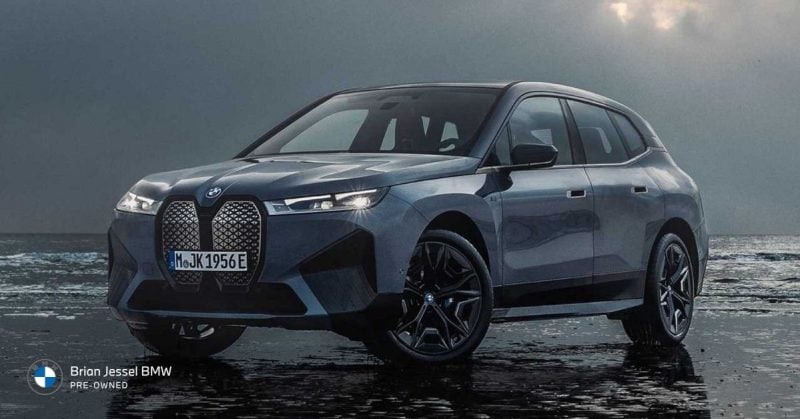
Best Used BMW EVs to Buy in 2026
Different BMW EVs suit different buyers. Some are aimed at urban commuting, while others focus more heavily on highway comfort, family use, or long-distance driving.
| Model | Good For | Range Notes | Driving Feel | Interior & Technology | Main Watch-Out |
| BMW i3 | City Driving, Urban Commuting, Lower Budget Buyers | Earlier Models Have Limited Range | Light, Quick, Easy to Park | Minimalist Cabin, Smaller Infotainment | Early Pre-2017 Models Have Smaller Batteries |
| BMW i4 | Mixed Driving, Highway Use, Daily Commuting | Stronger Highway Range | Similar Feel to a Traditional BMW Sport Sedan | Modern Curved Display, Familiar BMW Layout | Tire Wear and Insurance Costs |
| BMW iX | Families, Cargo Space, Longer Trips | Longer-Range SUV Option | Smooth Ride, Quiet Highway Driving | Larger Cabin, More Advanced Driver Tech | Higher Tire and Repair Costs |
| BMW i7 | Luxury Sedan Buyers | Long Highway Comfort Range | Heavy but Extremely Quiet | Executive-Level Interior and Rear Comfort | Higher Ownership Costs |
The i3 remains one of the more practical city-focused BMW EVs because of its compact footprint and lower used pricing. However, buyers should be realistic about range expectations, particularly for highway driving outside Metro Vancouver.
The i4 is often one of the more well-rounded options for buyers moving from a gas-powered BMW sedan because it combines familiar BMW driving behaviour with lower operating costs.
The iX may suit drivers who regularly travel outside Vancouver or need more cargo space and highway comfort.
What to Look for When Buying a Used BMW EV
Buying a used BMW EV requires more than checking mileage and appearance. Battery condition, charging history, warranty coverage, software status, and real-world range all affect ownership experience.
A structured inspection process can reduce the risk of unexpected repair costs or disappointing range performance.
Battery Health and Degradation
Battery health affects range, resale value, and long-term ownership confidence.
Battery wear can be affected by:
- Age
- Kilometres driven
- Frequent DC fast charging
- Long periods sitting near 100% charge
- Extreme temperatures
- Driving style
Repeated high-power DC fast charging may increase long-term battery wear compared with mostly Level 2 charging. Buyers should request a battery diagnostic report through a BMW retailer or third-party EV battery service where available.
Charging History and Usage Patterns
Charging behaviour affects long-term battery condition. Vehicles charged mostly through Level 2 home charging may experience slower degradation compared with EVs that relied heavily on repeated high-power DC fast charging.
This matters in Vancouver because many condo owners rely partly on public charging infrastructure. Buyers living in apartments or strata buildings should confirm charging availability before purchasing a used EV.
Software and Technology Condition
BMW EVs rely heavily on software for charging management, infotainment, navigation, safety systems, and remote services.
Buyers should confirm:
- iDrive software updates
- Navigation functionality
- Charging-system operation
- Smartphone connectivity
- Driver-assistance systems
- Over-the-air update capability
Newer BMW EV software versions can also improve charging performance, route planning, and battery preconditioning functions, particularly for winter driving and fast charging.
Warranty & Remaining Coverage
Warranty coverage remains important when purchasing a used luxury EV. BMW Canada states that battery-electric BMW batteries are covered for 8 years or 160,000 kilometres against defects in materials and workmanship.
BMW Canada also states that Certified Pre-Owned BMW vehicles must generally be less than 5 years old from their original in-service date and have fewer than 120,000 kilometres. BMW electric Certified vehicles include a battery health assessment as part of the certification process, along with additional warranty support depending on vehicle age and original in-service date.
Vehicle History & Safety Checks
A vehicle-history review remains important even with EVs.
Buyers should inspect:
- Accident history
- Service records
- Tire condition
- Suspension wear
- Brake condition
- Charging-port condition
- Wheel damage
- Signs of corrosion or water intrusion
Real-World Range vs Displayed Range
Dashboard range estimates can fluctuate depending on driving style, weather, terrain, and climate-control use. This is sometimes called the “guess-o-meter” effect because the displayed range constantly changes based on recent driving behaviour.
Buyers should not judge battery health only by the dashboard estimate. A proper test drive should include city traffic, highway speeds, hills, and realistic climate-control use.
Learn More: Most Reliable Used BMW Engines & Models
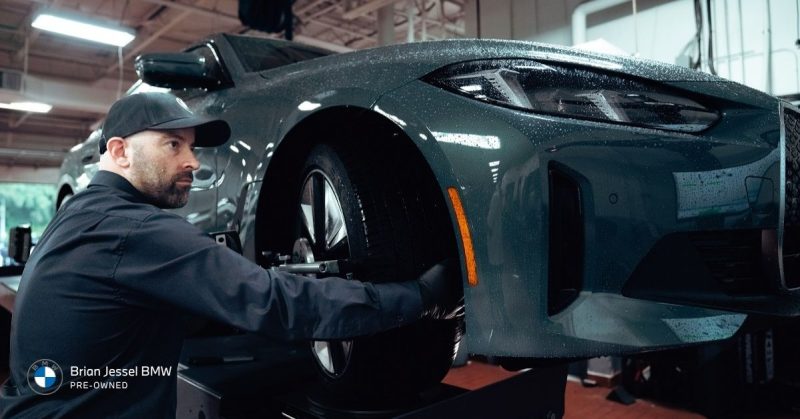
Key Considerations and Risks When Buying a Used BMW EV
A used BMW EV can offer strong value, but buyers should still understand the potential drawbacks before purchasing. Battery degradation can reduce usable range over time. Luxury EV repair costs can also be higher than repairs on mainstream EVs.
Other ownership considerations include:
- Cold-weather range reduction
- Tire wear from EV weight and instant torque
- Software glitches or infotainment issues
- Insurance costs
- Limited range on older EV models
- Charging availability during long-distance travel
For Vancouver-area drivers, winter driving to Whistler or Interior B.C. routes may reduce real-world range more noticeably than city commuting in the Lower Mainland. Highway speed, elevation gain, cabin heating, and colder temperatures all increase battery usage.
These risks can usually be reduced through battery diagnostics, warranty verification, proper model selection, and realistic range expectations before purchase.
Tips for Buying a Used BMW EV
A careful buying process can reduce uncertainty and help prevent unexpected ownership costs later.
Always Verify Battery Health with a Diagnostic Report
Battery condition directly affects vehicle value, reliability, and driving range. A battery health report is more reliable than the dashboard estimate, which can change based on temperature, driving habits, and recent use. Buyers should request a battery diagnostic report before purchasing a used BMW EV.
Prioritize Certified Pre-Owned (CPO) Vehicles
BMW Certified vehicles go through inspection processes and include additional warranty support. For many buyers, CPO status also provides more confidence regarding battery condition, software updates, maintenance records, and overall vehicle inspection quality.
Test Real Driving Range
A short parking-lot drive is not enough when purchasing an EV. Test drives should include realistic Vancouver driving conditions, including stop-and-go traffic, highway speeds, climate-control use, and hills where possible.
Check Charging Compatibility
Charging convenience affects daily EV ownership more than many first-time buyers expect. Buyers should confirm home charging access, condo or strata charging rules, nearby public chargers, and fast-charging availability before purchasing a used BMW EV. For drivers living in downtown Vancouver condos or older apartment buildings, confirming strata charging access beforehand is especially important.
Compare Total Ownership Cost
The purchase price is only one part of EV ownership. Buyers should also compare insurance rates, tire replacement costs, electricity expenses, public charging fees, warranty coverage, and potential repair costs before purchasing a used BMW EV.
Recommended Strategy for Buying a Used BMW EV
A structured buying plan can help reduce mistakes and improve long-term ownership satisfaction.
- Define your daily driving needs and charging access.
- Choose the right BMW EV based on range and vehicle size.
- Focus on vehicles roughly 3 to 6 years old.
- Avoid early pre-2017 BMW i3 models unless a shorter range fits your routine.
- Request a battery health report.
- Confirm battery warranty and CPO status.
- Review service records and accident history.
- Test drive under realistic Vancouver conditions.
- Compare total ownership costs before purchasing.
Buyers regularly commuting only within Vancouver may find an older i3 completely workable, while drivers travelling frequently to Whistler, Abbotsford, or Vancouver Island may benefit more from the longer-range i4 or iX.
Learn More: How to Buy Second-Hand Cars in Vancouver
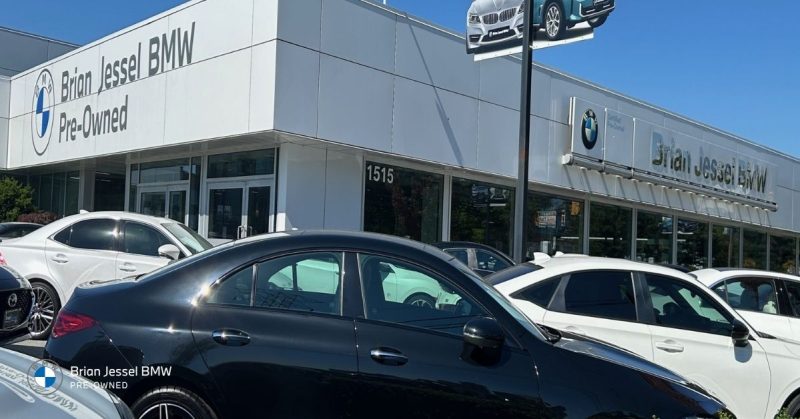
Why Buy from Brian Jessel Pre-Owned in Vancouver
Buying a used BMW EV through a BMW-focused retailer can provide more support and technical guidance than many private-party sales. Brian Jessel BMW states that it offers both new and pre-owned BMW inventory in the Greater Vancouver area, including BMW electric vehicles.
For used BMW EV buyers, working with a BMW retailer can help simplify questions around battery coverage, software systems, charging compatibility, inspection standards, and available Certified Pre-Owned coverage.
BMW-trained technicians can also inspect vehicle systems specific to EV ownership, including charging equipment, battery systems, software functionality, and high-voltage components.
For buyers moving into EV ownership for the first time, access to local BMW EV knowledge and post-purchase support can help reduce uncertainty during the transition away from gas vehicles.
Explore Available Used BMW EV Inventory in Vancouver
Used BMW EV inventory changes regularly depending on trade-ins, lease returns, and market demand. Depending on availability, Vancouver buyers may find models such as the BMW i3, BMW i4, BMW iX, BMW i7, and various BMW plug-in hybrid vehicles.
Inventory can also vary based on battery size, trim level, drivetrain configuration, and charging capability, so reviewing multiple vehicles side-by-side can help buyers compare long-term value more accurately.
To compare current options, buyers can review Brian Jessel’s available used BMW EV inventory and compare mileage, warranty status, battery information, trim levels, and charging features before making a final decision.
Final Verdict: Should You Buy a Used BMW EV in Vancouver?
A used BMW EV can make financial and practical sense for Vancouver drivers who want lower fuel spending, luxury features, and electric driving without paying current new-vehicle pricing. The purchase makes the most sense when battery health, warranty coverage, charging access, and real-world range have been properly reviewed before buying.
For many Vancouver drivers, the BMW i4 offers a strong balance of range, driving feel, and daily usability. The iX may suit buyers needing more space and highway comfort, while the i3 can still work well for shorter urban commuting.
Overall, the strongest buying approach is to focus on battery condition, charging access, warranty clarity, and inspection quality before making a final decision.
FAQs
1. What Is the Biggest Risk When Buying a Used EV?
Battery condition is usually the largest concern because degradation affects range and long-term value.
2. How Long Do BMW EV Batteries Last?
BMW Canada states that battery-electric BMW high-voltage batteries are covered for 8 years or 160,000 kilometres against defects in materials and workmanship, though some BMW documentation notes 120,000 km coverage for certain battery generations.
3. What Should I Check Before Buying a Used BMW EV?
Buyers should review battery health, charging history, software updates, accident history, service records, warranty coverage, tire condition, and real-world range performance.
4. Are BMW EVs Expensive to Maintain?
Routine maintenance is often lower than gasoline BMWs because EVs have fewer engine-related service items. However, tires, suspension repairs, electronics, and insurance can still be costly on luxury vehicles.
5. Which BMW EV Is Best to Buy Used in 2026?
The i3 suits shorter urban driving, the i4 suits mixed commuting and highway use, and the iX suits buyers needing more SUV space and longer-range comfort.
6. Is It Better to Buy a Used EV from a Dealership or Private Seller?
A private seller may offer lower pricing, but a dealership can provide inspections, financing support, warranty details, battery diagnostics, and Certified Pre-Owned options.
7. How Does Cold Weather in Vancouver Affect EV Performance?
Cold weather can reduce EV range because more battery energy is used for cabin heating and battery temperature management. Vancouver’s climate is milder than many Canadian regions, but winter range reduction can still occur during highway driving or mountain travel.
Explore More: Used BMW 2023 in vancouver, Used BMW 2024 in vancouver, Used BMW 2025 in vancouver, Used BMW SUVs, BMW Used Sedan, Used SUVs for Sale