Compare BMW 330e Years: A Model-Year Guide for Pre-Owned Buyers
Compare BMW 330e Years: A Model-Year Guide for Pre-Owned Buyers
Posted on October 16, 2026
Choosing between used BMW 330e models comes down to understanding what changed between generations. Buyers searching to compare BMW 330e years are usually trying to answer a practical question: is a newer 330e worth the additional cost, or does an older model still provide the right balance of electric driving capability, performance, and value?
This guide compares the BMW 330e generations available to Canadian buyers, explains the differences that matter on the pre-owned market, and helps Vancouver-area drivers decide which version fits their daily commute, charging situation, and driving needs.
See current pre-owned BMW 3 Series inventory or pre-owned BMW 330e inventory at Brian Jessel BMW Pre-Owned.
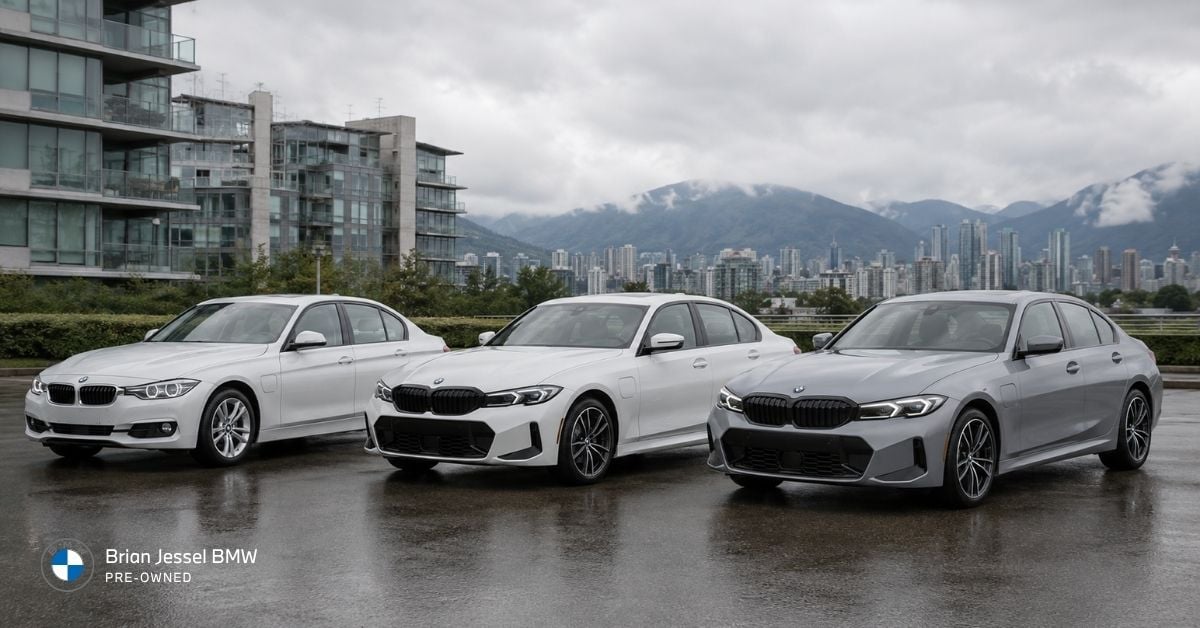
BMW 330e Year Comparison Chart: Every Model Year at a Glance
The BMW 330e was sold in Canada for model years 2016–2018, followed by a two-model-year gap in 2019 and 2020. It returned for 2021 as the redesigned G20-generation 330e and 330e xDrive and remained available through model year 2024. BMW Canada did not offer the 330e in its 2025 Canadian 3 Series lineup. The G20 generation brought the larger battery system, XtraBoost performance and, for the first time in Canada, available xDrive all-wheel drive.
BMW 330e Year-by-Year Comparison: Key Differences Between Canadian Models |
|||||
|---|---|---|---|---|---|
| Model Year | Generation | Drivetrain Options | Battery Capacity | Official Electric-Only Range | Key Change That Year |
| 2016 | F30 | Rear-Wheel Drive | 7.6 kWh Gross / 5.7 kWh Net | 23 km | Canadian Launch of the BMW 330e Plug-In Hybrid |
| 2017 | F30 | Rear-Wheel Drive | 7.6 kWh Gross / 5.7 kWh Net | 23 km | Continued F30 330e With the Same Core Plug-In Hybrid System |
| 2018 | F30 | Rear-Wheel Drive | 7.6 kWh Gross / 5.7 kWh Net | 23 km | Final Canadian Model Year of the F30 330e |
| 2019 | Not Offered | Not Offered in Canada | Not Applicable | Not Applicable | BMW 330e Not Offered as a Canadian 2019 Model |
| 2020 | Not Offered | Not Offered in Canada | Not Applicable | Not Applicable | BMW 330e Not Offered as a Canadian 2020 Model |
| 2021 | G20 | Rear-Wheel Drive or xDrive | 12 kWh Gross / 9.09 kWh Net | 37 km RWD / 32 km xDrive | Redesigned G20 330e Introduced With XtraBoost and Available xDrive |
| 2022 | G20 | Rear-Wheel Drive or xDrive | 12 kWh Gross / 9.09 kWh Net | 32 km xDrive; RWD Range to Be Verified | Continued G20 330e With RWD and xDrive Options |
| 2023 | G20 LCI | Rear-Wheel Drive or xDrive | 12 kWh Gross / 9.09 kWh Net | 35 km RWD / 34 km xDrive | LCI Refresh Added BMW Curved Display and iDrive 8 |
| 2024 | G20 LCI | Rear-Wheel Drive or xDrive | 12 kWh Gross / 9.09 kWh Net | 35 km RWD / 34 km xDrive | Final Confirmed Canadian Model Year of the 330e |
| 2025 | Not Offered | Not Offered in Canada | Not Applicable | Not Applicable | BMW 330e Removed From the Canadian 3 Series Lineup |
- The 2016 BMW 330e introduced the plug-in hybrid 3 Series to the Canadian market.
- The BMW 330e was not offered as a Canadian model for 2019 or 2020.
- The 2021 BMW 330e returned on the redesigned G20 platform with a larger 12-kWh gross battery, XtraBoost and available xDrive all-wheel drive.
- The 2023 BMW 330e received the G20 LCI update, including BMW Curved Display and revised interior technology.
- The 2024 model year was the final confirmed Canadian BMW 330e model year before the 330e disappeared from BMW Canada’s 2025 3 Series lineup.
What Is the BMW 330e? Plug-In Hybrid Basics
The BMW 330e is a plug-in hybrid version of the BMW 3 Series sedan. It combines a gasoline engine, electric motor, and rechargeable battery to allow electric-only driving for shorter distances before continuing with gasoline power.
A plug-in hybrid differs from a regular hybrid because it can be charged from an external power source. It differs from a full electric vehicle because the gasoline engine can continue providing driving range when the battery charge is depleted.
During the Canadian model years when it was offered, the BMW 330e sat alongside gasoline-powered 3 Series models such as the 330i. The 330i uses a gasoline powertrain, while the 330e adds BMW eDrive plug-in hybrid technology for drivers who want electric driving capability while retaining gasoline-powered range.
For Metro Vancouver drivers, a plug-in hybrid can make sense for daily commuting and shorter trips while keeping gasoline-powered flexibility for longer drives to destinations such as Whistler, the Interior, or ferry terminals.
BMW uses the “e” designation for vehicles equipped with plug-in hybrid eDrive technology.
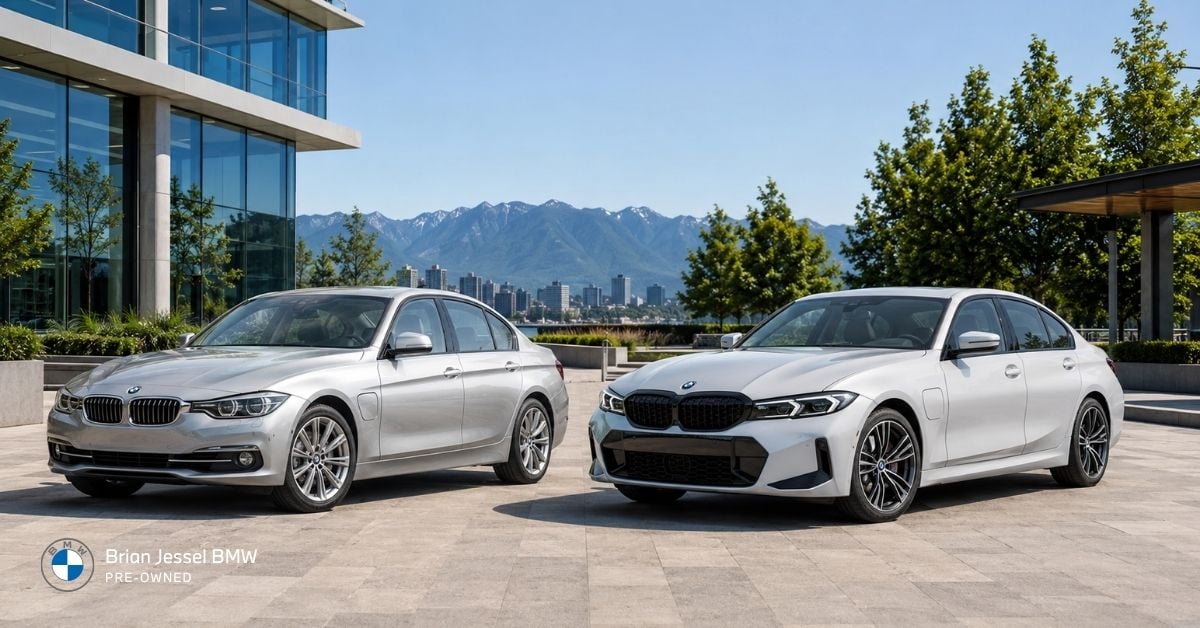
BMW 330e Generations Explained: F30 vs G20
Canadian BMW 330e models fall into two generations: the F30, sold here for model years 2016–2018, and the G20, sold for model years 2021–2024. There were no Canadian 330e model years for 2019 or 2020. A generation is a full vehicle redesign, while LCI is BMW’s term for a mid-cycle refresh within the same generation.
F30 BMW 330e
The F30-generation BMW 330e was offered in Canada for model years 2016, 2017 and 2018. It introduced plug-in hybrid capability to the Canadian 3 Series range and was offered with rear-wheel drive.
The F30 330e can suit buyers who:
- Want a lower purchase price
- Drive shorter daily distances
- Prefer entering BMW plug-in hybrid ownership at a lower cost
The trade-offs compared with newer models are:
- Smaller battery capacity compared with the G20 generation
- Shorter electric driving capability compared with newer generations
- Earlier BMW interior design and iDrive technology compared with the redesigned G20 platform
For buyers focused mainly on value, an F30 BMW 330e can still provide the core plug-in hybrid experience.
G20 BMW 330e
The G20-generation BMW 330e returned to Canada for the 2021 model year and remained available through 2024. It brought the largest changes for used buyers, including a larger high-voltage battery, XtraBoost performance and the availability of xDrive all-wheel drive.
The G20 BMW 330e offers:
- A 12 kWh gross battery with 9.09 kWh usable capacity
- 288 horsepower and 310 lb-ft of torque with XtraBoost
- Available BMW xDrive all-wheel drive
- Updated interior technology compared with the F30 generation
For shoppers comparing a 2021 BMW 330e with later versions, the biggest differences are usually equipment, technology, condition, mileage, and remaining warranty coverage rather than a completely different powertrain.
BMW 330e Electric Range by Year: How Far It Goes on Battery Alone
Canadian BMW 330e electric range improved substantially with the move from the F30 to the G20 generation. The 2016–2018 F30 is rated at 23 kilometres of electric range, while Canadian G20 models covered here are rated between 32 and 37 kilometres depending on model year and drivetrain.
Natural Resources Canada reports electric range and gasoline-only range separately for plug-in hybrids rather than publishing a single official “combined range” figure. The table below therefore uses NRCan’s Canadian ratings for both measurements.
Canadian BMW 330e Electric and Gasoline Range by Model Year |
||||
|---|---|---|---|---|
| Model Year | Battery Capacity | Drivetrain | Official Electric-Only Range | NRCan Gasoline-Only Range |
| 2016 BMW 330e | 7.6 kWh Gross / 5.7 kWh Usable | Rear-Wheel Drive | 23 km | 562 km |
| 2017 BMW 330e | 7.6 kWh Gross / 5.7 kWh Usable | Rear-Wheel Drive | 23 km | 557 km |
| 2018 BMW 330e | 7.6 kWh Gross / 5.7 kWh Usable | Rear-Wheel Drive | 23 km | 533 km |
| 2019–2020 | Not Offered in Canada | — | — | — |
| 2021 BMW 330e | 12 kWh Gross / 9.09 kWh Net | Rear-Wheel Drive | 37 km | 486 km |
| 2021 BMW 330e xDrive | 12 kWh Gross / 9.09 kWh Net | xDrive All-Wheel Drive | 32 km | 436 km |
| 2022 BMW 330e xDrive | 12 kWh Gross / 9.09 kWh Net | xDrive All-Wheel Drive | 32 km | 436 km |
| 2023 BMW 330e | 12 kWh Gross / 9.09 kWh Net | Rear-Wheel Drive | 35 km | 468 km |
| 2023 BMW 330e xDrive | 12 kWh Gross / 9.09 kWh Net | xDrive All-Wheel Drive | 34 km | 452 km |
| 2024 BMW 330e | 12 kWh Gross / 9.09 kWh Net | Rear-Wheel Drive | 35 km | 468 km |
| 2024 BMW 330e xDrive | 12 kWh Gross / 9.09 kWh Net | xDrive All-Wheel Drive | 34 km | 452 km |
Source: Natural Resources Canada Fuel Consumption Guides for the applicable Canadian model years. Range figures are standardized ratings and should not be interpreted as guaranteed real-world driving distances.
Real-world electric range can differ from official ratings because outside temperature, driving speed, terrain, battery condition and climate-control use all affect energy consumption. Vancouver’s relatively moderate coastal climate can reduce some of the extreme cold-weather effects experienced in colder regions, although lower temperatures can still reduce available electric range.
For a Burnaby-to-downtown Vancouver commute or a similar daily route, the practical question is whether the 330e’s electric range covers enough of the driver’s regular travel and whether the vehicle can be recharged between trips.
If you’re also considering a full electric BMW, the 2024 BMW i4 review provides another point of comparison.
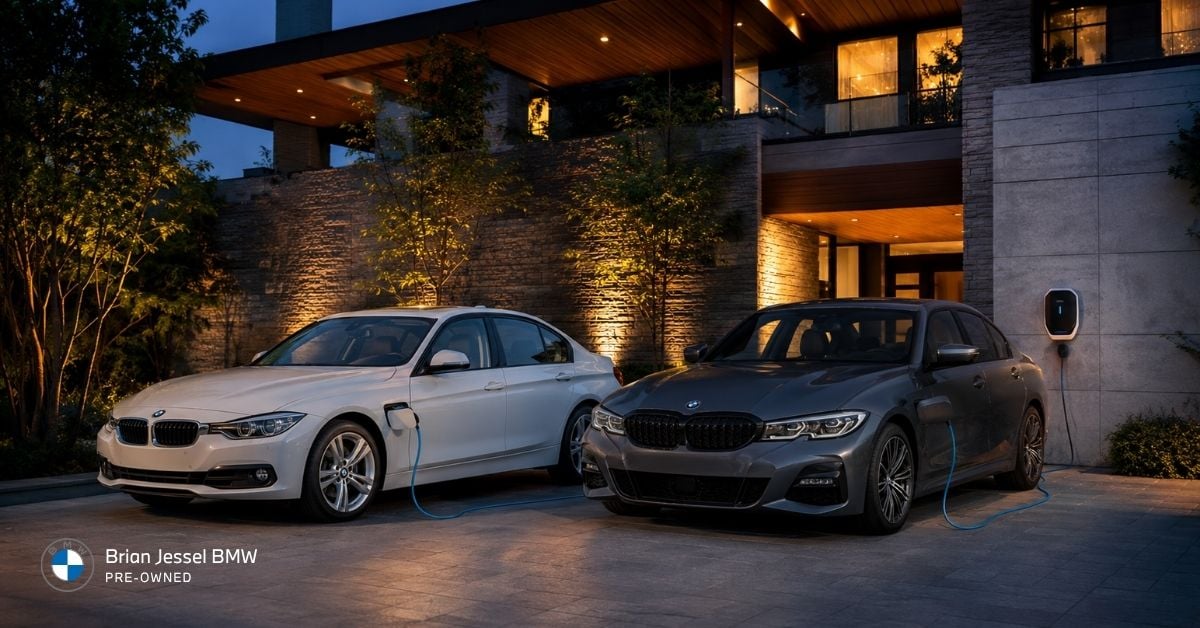
How Long Does It Take to Charge a BMW 330e?
Charging time differs considerably between the F30 and G20 BMW 330e because the newer generation has a larger high-voltage battery. The F30 can charge from empty in approximately 6–7 hours from a 120-volt household outlet or about 2.5 hours using a 240-volt BMW i Wallbox. The G20 takes approximately 10.9 hours using its 1.1-kW household charging connection or 2.9 hours using a 3.7-kW AC wallbox.
| Charging Method | F30 BMW 330e (2016–2018) | G20 BMW 330e (2021–2024) | Practical Use |
| Standard 120-Volt Household Outlet | Approximately 6–7 Hours From Empty | Approximately 10.9 Hours From Empty at 1.1 kW | Suitable for Overnight Charging When Faster Charging Is Not Required |
| 240-Volt Level 2 Charging | Approximately 2.5 Hours From Empty at 3.5 kW | Approximately 2.9 Hours From Empty at 3.7 kW | Faster Home Charging for Drivers Who Regularly Recharge Between Trips |
| Maximum Documented AC Charging Rate | Approximately 3.5 kW | 3.7 kW | A Higher-Power Level 2 Station Will Not Make the Vehicle Charge Beyond Its Supported AC Rate |
BMW’s F30 technical material specifies approximately 6–7 hours at 120 volts and 2.5 hours using a 240-volt Level 2 BMW i Wallbox at 3.5 kW. BMW’s Canadian G20 product guide specifies 10.9 hours at 1.1 kW and 2.9 hours at 3.7 kW for a full 0–100% charge. The same Canadian guide gives 0–80% times of 8.7 hours and 2.1 hours respectively.
For Vancouver-area drivers, either generation can therefore be charged overnight from a standard household outlet, although the larger-battery G20 requires substantially longer. A Level 2 home charger reduces a full charge to roughly three hours or less for either generation, which can be more practical for drivers who want to recharge between trips rather than only overnight.
BMW 330e Performance Changes by Model Year
The major performance increase came with the transition from the F30 to the G20 generation rather than through annual changes. Canadian F30 330e models produced 252 hp and reached 100 km/h in 6.1 seconds, while the G20 increased maximum combined output to 288 hp with XtraBoost and added an xDrive variant. The 2023 LCI primarily changed design and cabin technology rather than introducing another major 330e powertrain revision.
BMW 330e Performance by Canadian Model Year |
||||
|---|---|---|---|---|
| Model Year | Drivetrain | Combined Output | 0–100 km/h | Notable Powertrain Change |
| 2016 BMW 330e | Rear-Wheel Drive | 252 hp / 310 lb-ft | 6.1 Seconds | Canadian Introduction of F30 Plug-In Hybrid Powertrain |
| 2017 BMW 330e | Rear-Wheel Drive | 252 hp / 310 lb-ft | 6.1 Seconds | Continued F30 Plug-In Hybrid Powertrain |
| 2018 BMW 330e | Rear-Wheel Drive | 252 hp / 310 lb-ft | 6.1 Seconds | Final Canadian F30 330e Model Year |
| 2019–2020 | Not Offered in Canada | — | — | Two-Model-Year Canadian Availability Gap |
| 2021 BMW 330e | Rear-Wheel Drive | 288 hp / 310 lb-ft With XtraBoost | 5.9 Seconds | New G20 Powertrain and XtraBoost |
| 2021 BMW 330e xDrive | xDrive All-Wheel Drive | 288 hp / 310 lb-ft With XtraBoost | 6.0 Seconds | xDrive Introduced for Canadian 330e |
| 2022 BMW 330e | Rear-Wheel Drive | 288 hp / 310 lb-ft With XtraBoost | 5.9 Seconds | Continued G20 Powertrain |
| 2022 BMW 330e xDrive | xDrive All-Wheel Drive | 288 hp / 310 lb-ft With XtraBoost | 6.0 Seconds | Continued G20 xDrive Powertrain |
| 2023 BMW 330e | Rear-Wheel Drive | 288 hp / 310 lb-ft With XtraBoost | 5.9 Seconds | LCI Update Without Major Powertrain Redesign |
| 2023 BMW 330e xDrive | xDrive All-Wheel Drive | 288 hp / 310 lb-ft With XtraBoost | 6.0 Seconds | LCI Update Without Major Powertrain Redesign |
| 2024 BMW 330e | Rear-Wheel Drive | 288 hp / 310 lb-ft With XtraBoost | 5.9 Seconds | Continued G20 LCI Powertrain |
| 2024 BMW 330e xDrive | xDrive All-Wheel Drive | 288 hp / 310 lb-ft With XtraBoost | 6.0 Seconds | Continued G20 LCI Powertrain |
XtraBoost temporarily adds up to 40 hp to the G20 330e’s normal combined system output under specified high-load conditions, bringing maximum combined output to 288 hp for up to 10 seconds. It was introduced with the 2021 G20 330e and was not offered on the earlier F30 generation.
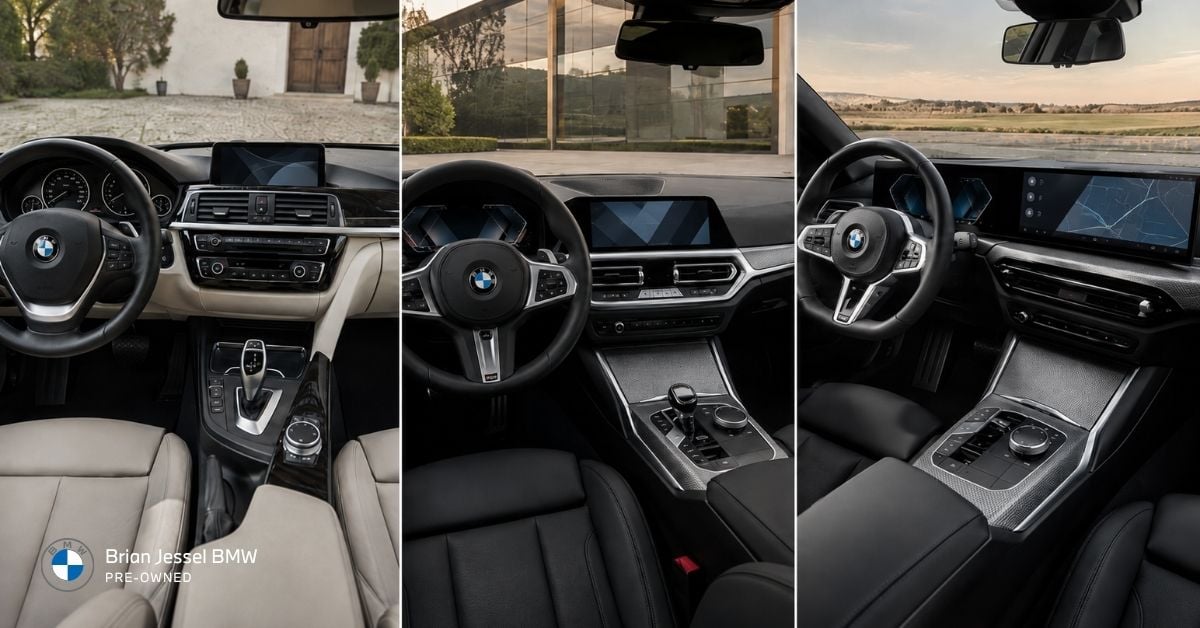
BMW 330e Technology and Interior Updates by Year
The biggest technology dividing line for Canadian BMW 330e shoppers is the 2023 model year. The 2021–2022 G20 cars already moved well beyond the older F30 cabin with BMW iDrive 7 and newer digital displays, while the 2023 facelift introduced BMW Curved Display and iDrive 8 with a substantially different dashboard layout.
BMW 330e Technology and Interior Comparison |
||||||
|---|---|---|---|---|---|---|
| Model Year | Infotainment System | Screen Setup | Smartphone Integration | Driver-Assistance Highlights | Cargo Capacity | Notable Interior Change |
| 2016 BMW 330e | F30-Generation BMW iDrive; Equipment Varies | Separate Centre Display and Instrument Cluster | Equipment Dependent | BMW ConnectedDrive and Available Driver-Assistance Features | 370 L | Original Canadian 330e Interior Configuration |
| 2017 BMW 330e | F30-Generation BMW iDrive; Equipment Varies | Separate Centre Display and Instrument Cluster | Wireless Charging and Wi-Fi Features Available by Equipment | Driver-Assistance Equipment Varied by Package | 370 L | Continued F30 Interior Architecture |
| 2018 BMW 330e | F30-Generation BMW iDrive; Equipment Varies | Separate Centre Display and Instrument Cluster | Connectivity Features Varied by Equipment | Driver-Assistance Equipment Varied by Package | 370 L | Final Canadian F30 330e Model Year |
| 2021 BMW 330e / 330e xDrive | BMW iDrive 7 | Up to 12.3-Inch Digital Instrument Display and 10.25-Inch Central Touchscreen With Live Cockpit Professional | Apple CarPlay; Android Auto and Wireless Functions Depending on Equipment | Frontal Collision Warning, Lane Departure Warning and Blind Spot Detection Standard; Driving Assistant Professional Available | 375 L | Full G20 Redesign With Modern Digital Cockpit |
| 2022 BMW 330e / 330e xDrive | BMW iDrive 7 | G20 Digital Display Architecture; Equipment Dependent | Wireless Smartphone Integration Depending on Equipment | Advanced Driver-Assistance Packages Available Depending on Configuration | 375 L | Continued Pre-Facelift G20 Technology |
| 2023 BMW 330e / 330e xDrive | BMW Operating System 8 / iDrive 8 | BMW Curved Display: 12.3-Inch Information Display + 14.9-Inch Control Display | Apple CarPlay and Android Auto Integration Available Through the Updated iDrive Environment | Driver-Assistance Equipment Continued to Vary by Package | 375 L | LCI Introduced BMW Curved Display and Major Dashboard Redesign |
| 2024 BMW 330e / 330e xDrive | BMW Operating System 8 / iDrive 8 | 12.3-Inch + 14.9-Inch BMW Curved Display | Connected Smartphone Functions Depending on Equipment and Software | Driver-Assistance Features Vary by Individual Vehicle | 375 L | Continued G20 LCI Cabin and Curved Display |
BMW Canada’s 2023 facelift material confirms that the BMW Curved Display became standard in the updated 3 Series, combining a 12.3-inch information display with a 14.9-inch control display and running BMW Operating System 8. The 330e and 330e xDrive remained part of the Canadian lineup through this update.
For buyers comparing older and newer cars, the practical breakpoints are straightforward. A 2016–2018 F30 has the older dashboard architecture and separate centre display. A 2021–2022 G20 brings the redesigned cabin, iDrive 7 and a much more digital instrument-and-infotainment environment. A 2023–2024 G20 LCI makes the largest visible technology jump with BMW Curved Display and iDrive 8.
How Much Cargo Space Does the BMW 330e Have?
The plug-in hybrid system reduces trunk space compared with a gasoline-only 3 Series, but the difference between the two 330e generations is small. BMW lists 370 litres for the F30 330e and 375 litres for the G20 330e. By comparison, BMW listed 480 litres for the regular G20 3 Series Sedan, so the plug-in hybrid sacrifices roughly 105 litres because of its battery and fuel-system packaging.
Both generations retain folding rear-seat capability, but shoppers who regularly carry larger luggage, strollers or sports equipment should compare the actual cargo area of the vehicle they are considering rather than relying on exterior size alone.
Equipment varies by individual pre-owned vehicle. Display hardware, smartphone functions, driver-assistance systems and option packages should be confirmed from the VIN, original build information and the individual listing before purchase.
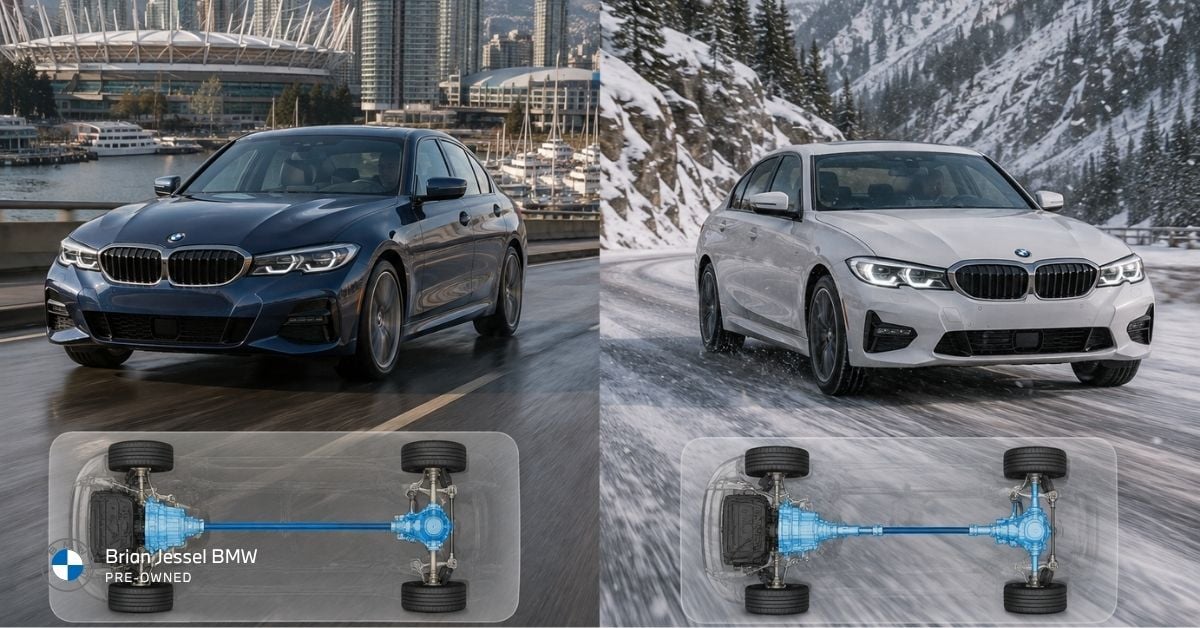
BMW 330e vs 330e xDrive: Which Years Offer All-Wheel Drive?
The BMW 330e xDrive became available in Canada with the G20 generation for the 2021 model year. Earlier Canadian F30 BMW 330e models were rear-wheel drive only, while G20 330e xDrive variants remained part of the Canadian offering through 2024.
For Vancouver drivers, the choice between BMW 330e rear-wheel drive and BMW 330e xDrive depends on how the vehicle will be used.
BMW 330e Rear-Wheel Drive
A rear-wheel-drive BMW 330e can suit drivers who mainly travel around Metro Vancouver, prefer a simpler drivetrain configuration, and prioritize efficiency for daily commuting. For drivers whose routes are primarily urban and do not regularly involve challenging winter conditions or mountain roads, rear-wheel drive can provide the plug-in hybrid benefits of the 330e while meeting everyday driving needs.
BMW 330e xDrive
A BMW 330e xDrive can suit drivers who regularly travel through mountain routes, drive toward Whistler or areas with changing weather conditions, and prefer additional traction during winter conditions. The xDrive all-wheel-drive system can provide added confidence in situations where road conditions, elevation changes, or reduced traction are part of the driving environment.
The trade-off is that drivetrain choice can affect efficiency and electric range ratings. Electric range varies depending on model year, drivetrain, battery capacity, temperature, and driving conditions. Buyers should check the NRCan rating for the exact vehicle they are considering.
Which BMW 330e Year Is the Best Buy for Vancouver Drivers?
The right BMW 330e depends on how the vehicle will be used. A buyer who mainly commutes locally may value purchase price and efficiency, while someone who frequently travels outside Vancouver may prefer the additional traction and newer technology available with later G20 models.
When comparing pre-owned BMW 330e models, buyers should consider factors beyond model year, including vehicle condition, mileage, service history, available equipment, drivetrain choice, charging access, and remaining warranty coverage.
Earlier BMW 330e models can appeal to shoppers prioritizing value, while newer G20-generation models offer updated technology, a larger battery system, higher combined output with XtraBoost, and available BMW xDrive capability.
Best for a Short Daily Commute and an Earlier-Generation Option
The 2016–2018 F30 BMW 330e can suit buyers whose regular driving fits within its shorter electric range and who do not require xDrive or the newer G20 technology environment. When comparing individual F30 examples, consider condition, kilometres, service history, equipment and asking price rather than assuming the older model year automatically represents better value.
Best for All-Weather and Longer Highway Driving
A BMW 330e xDrive from the G20 generation can suit drivers who regularly travel through changing weather conditions or mountain routes. The available xDrive system adds all-wheel-drive capability while keeping the plug-in hybrid benefits of the 330e.
Best for the Newest Technology and Remaining Warranty Coverage
The 2023–2024 G20 LCI models can appeal to buyers who want the newest Canadian 330e interior technology and styling, including BMW Curved Display. Remaining factory warranty coverage depends on the individual vehicle’s original in-service date and kilometres.
Best All-Round Balance of Features and Capability
For buyers who want the G20 platform without making BMW Curved Display a priority, the 2021–2022 330e is an important range to compare. These model years offer the larger G20 battery system, available xDrive and XtraBoost while retaining the pre-LCI cabin layout. Final value depends on the individual vehicle’s price, kilometres, condition, equipment and remaining coverage.
When comparing ownership costs in British Columbia, buyers should consider:
- Insurance: BC insurance costs vary depending on driver history, coverage choices, vehicle details, and ICBC requirements.
- Maintenance: A plug-in hybrid requires gasoline-engine servicing and technicians familiar with hybrid systems.
- Home charging: A Level 2 charger can make daily charging more convenient, but installation depends on the home electrical system and driving habits.
See current pre-owned BMW inventory and available financing options through Brian Jessel BMW Pre-Owned.
Shoppers replacing another vehicle can also value their current vehicle as part of the purchase decision.
Buying a Pre-Owned BMW 330e: What a Certified Inspection Covers
A BMW Certified Pre-Owned vehicle must meet the eligibility requirements of BMW Canada’s Certified Pre-Owned programme and undergo inspection and reconditioning by BMW Certified Technicians using Original BMW Parts. BMW Canada currently limits Certified eligibility to vehicles no more than five years from their original in-service date and with no more than 120,000 kilometres, and a CARFAX Vehicle History Report is included as part of the programme.
Every BMW Certified vehicle also receives at least one year of applicable warranty coverage. Depending on the vehicle’s age, that coverage consists of either the remaining New Vehicle Limited Warranty, up to four years or 80,000 kilometres from the original in-service date, or BMW Certified Powertrain Limited Warranty coverage through five years with unlimited kilometres from the original in-service date. BMW Roadside Assistance applies for the duration of the applicable warranty coverage. Terms and programme benefits are subject to BMW Canada’s current conditions.
Important areas to review include:
- Hybrid system operation
- Charging system operation
- Electric drive components
- Gasoline engine operation
- Vehicle history and maintenance records
High-Voltage Battery Warranty and BMW Certified Coverage
BMW Canada’s high-voltage battery warranty information states that the high-voltage battery in electric and plug-in hybrid BMW vehicles remains covered for up to 8 years or 160,000 kilometres under the applicable manufacturer battery warranty. Because this article covers 330e model years dating back to 2016, buyers should confirm the original warranty terms, in-service date, kilometres and remaining high-voltage-battery coverage for the specific VIN rather than applying current warranty terms automatically to every earlier 330e.
BMW Certified Pre-Owned coverage is separate from the vehicle’s original high-voltage-battery warranty. BMW Canada currently provides eligible Certified vehicles with either the remaining New Vehicle Limited Warranty or applicable BMW Certified powertrain coverage, depending on the vehicle’s age and in-service date. CPO status therefore does not restart or replace the original high-voltage-battery warranty.
For a second-owner 330e, the remaining battery coverage should be verified by VIN with an authorized BMW Retailer before purchase. This confirms both the original model-year warranty terms and whether any remaining coverage applies to the current purchaser.
Find a Pre-Owned BMW 330e at Brian Jessel BMW Pre-Owned
Comparing BMW 330e years helps narrow down the right vehicle, but the condition of the individual car matters just as much as the model year.
Mileage, service history, equipment, drivetrain, previous ownership, and remaining warranty coverage all affect the value of a pre-owned BMW 330e.
Brian Jessel BMW Pre-Owned helps Vancouver-area drivers compare available BMW 330e models and understand the differences between generations.
Browse current pre-owned BMW inventory, explore financing options or contact Brian Jessel BMW Pre-Owned at (604) 222-8820. The dealership is located at 1515 Boundary Road, Vancouver, BC V5K 5C4.
Compare BMW 330e Years: Frequently Asked Questions
1. What is the difference between the BMW 330e and the 330i?
The BMW 330e is a plug-in hybrid that combines a gasoline engine with an electric motor and rechargeable battery. The BMW 330i uses a conventional gasoline engine without plug-in hybrid capability.
2. How many kilometres can a BMW 330e travel on electric power alone?
Canadian BMW 330e models in this comparison are officially rated at approximately 23 to 37 kilometres of electric-only range, depending on model year and drivetrain. The 2016–2018 F30 models are rated at 23 km, while G20 versions range from 32 to 37 km in the figures used above. Actual range varies with temperature, speed, terrain, climate-control use, battery condition and other factors.
3. Do you have to plug in a BMW 330e?
No. The BMW 330e can continue driving using its gasoline engine when the battery charge is depleted. Plugging in allows drivers to use more electric driving capability.
4. How long does a BMW 330e hybrid battery last?
Battery life depends on vehicle use, charging habits, climate, and maintenance history. Buyers should review the vehicle’s condition, service records, and remaining warranty coverage.
5. Does the BMW 330e hybrid battery warranty transfer to the second owner?
Remaining manufacturer warranty coverage may continue with the vehicle, but the applicable high-voltage-battery terms depend on the BMW 330e’s model year, original in-service date and kilometres. Because BMW Canada’s publicly available historical warranty information does not establish one identical battery-warranty term for every 2016–2024 Canadian 330e, ask an authorized BMW Retailer to verify the VIN-specific remaining battery coverage before purchase.
6. Can you charge a BMW 330e from a regular household outlet?
Yes. BMW 330e models can be charged using household charging equipment. Charging time depends on the model year, battery capacity, and charging equipment available. Buyers should confirm charging specifications for the specific BMW 330e they are considering.
7. Is a used BMW 330e a good buy?
A used BMW 330e can suit buyers looking for electric commuting capability with gasoline-powered flexibility. The right choice depends on budget, charging access, driving habits, and preferred features.
8. How does the BMW 330e perform in winter conditions?
Cold temperatures can reduce electric range because battery performance and cabin heating affect energy use. Drivers who regularly travel in winter conditions may prefer a BMW 330e xDrive for additional traction capability.
9. Does the BMW 330e have less trunk space than a standard 3 Series?
Yes. The plug-in hybrid battery system requires additional packaging space, reducing cargo capacity compared with gasoline-only BMW 3 Series models.